
A Tree Planting Scam
...or Farming in Four Dimensions

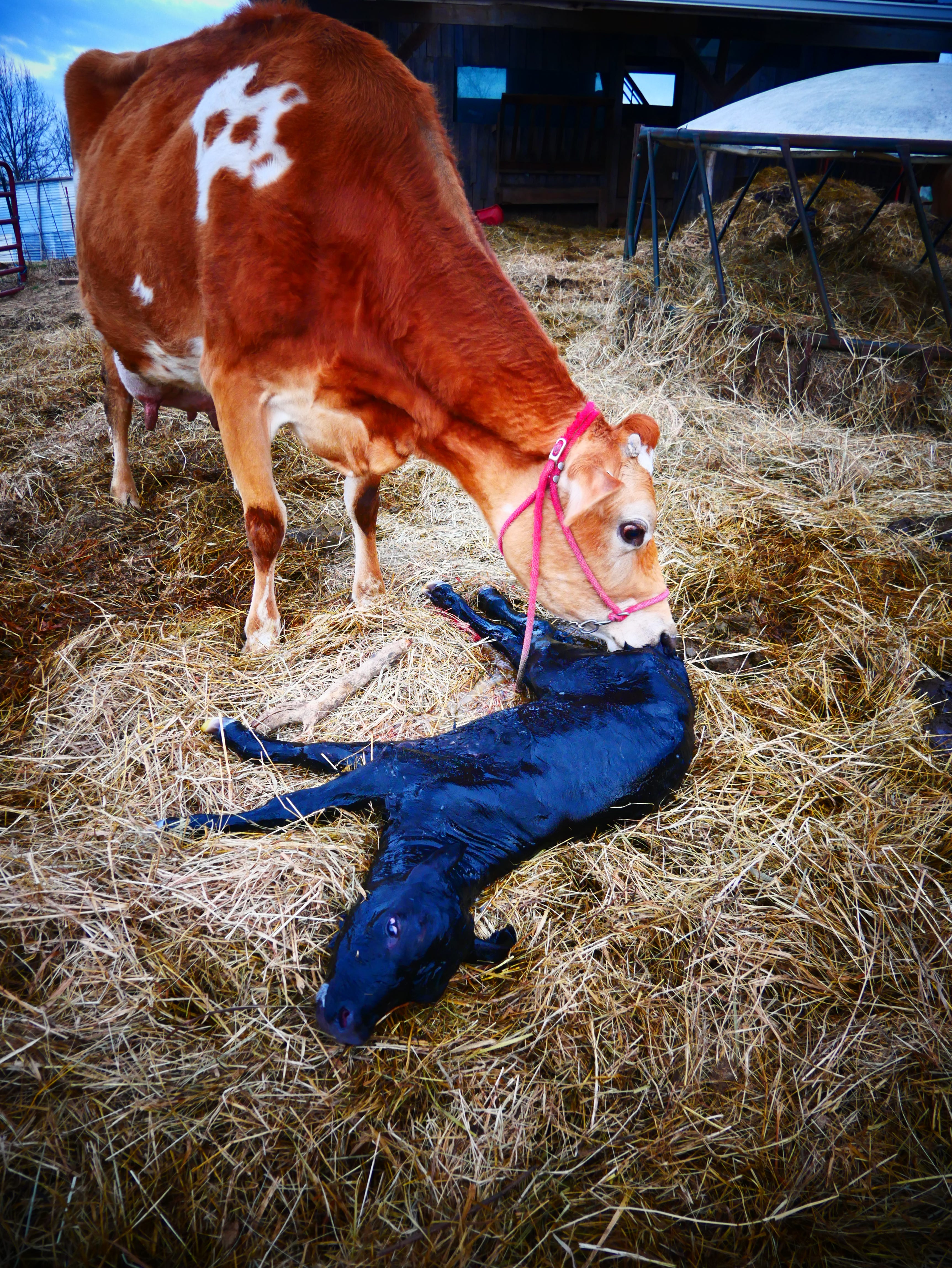
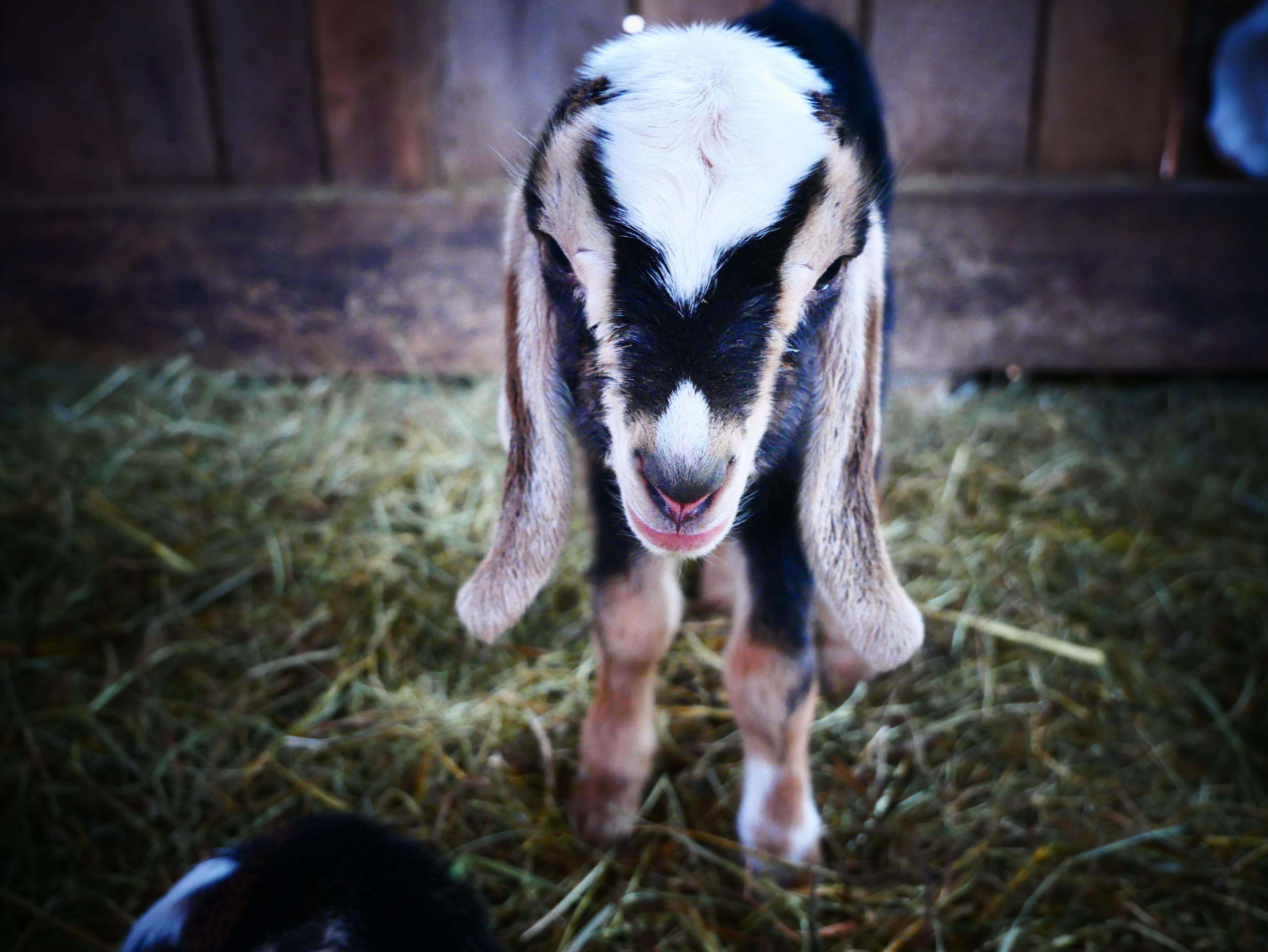
At dawn, swooping formations of robins careen between the bare and sleeping boughs of Osage orange and waking willows shining with bulging buds, fluttering to earth, pecking along the cool soil speckled with worm-holes. They fill their fat crops and nibble in the duff, cycling worm-flesh back into the dirt. One of our nanny goats is in active labor– before my third cup of coffee she is working to logistically organize nursing three new kids. Brief bouts of rain and heat have urged the grasses into growth, and in the early green-up, the cows stand at their gates, anxious to graze after a long winter of hay and loafing yards.
For the casual observer, who needn’t tend to cold, wet kids, haul manure, plant potatoes or fulfill any other dozen tasks in this breaking of dormancy, it is a perfectly damned bucolic scene, with fat goats belching grassy breath in their barn, roving pigs nuzzling in the thatch, steaming piles of compost writhing with microbial life, hunted over by thick flocks of robins, and the faintest whiff of duck shit wafting in the barnyard breeze. But for me, it is once again the peak of vernal anxiety. The weight of growing task lists keeps me awake, and even in my dreams I am standing in fields, puzzling over notebooks. It would appear that if I am to accomplish my goals for the quickly fading month of March, I may need to convince some of these casual observers that the work is fun, easy and rewarding.
Past the equinox, with the demands of daylight greatly exceeding any opportunities for rest, life somehow resumes… the neo-natal buds on tired old trees stretching and swelling out from their dull, lichenous twigs, the symphonics of chorus frogs and timberdoodles growing more rousing in each brief sundown, the sudden spawning of wriggling mosquito larvae in old rain barrels affect me just as the cattle stomping impatiently at the gate with chlorophyll on the breeze. If I get sweet dirt on my bare hands just once in the morning, I will be found at the end of a long trail of half-finished projects and hacked-down brush. I do dread spring, and also, I’m compelled to become tangled in it.
I’m not particularly young anymore, and my physical peak lies some years in the past now; however, it would seem that my youthful ambition has only gained momentum. We’re planting another 200 or so trees and shrubs this year– possibly more. That isn’t a lot of trees in comparison with some plantings, but the difference here is that I want to do the best job possible, and I’m starting off with rough terrain and looming challenges. As folks in the affluent Western world become increasingly (and correctly) concerned with the state of our planet, they often find some comfort in paying some small sum of money for somebody else to fix it. Sometimes, that “somebody” is doing good and legitimate work, but often it is either woefully ineffective or an outright scam.
Well, as an ambitious person, I’m running my own tree-planting scam. The trees really are being planted, not to mention well-cared for and maintained, and nobody is making any money off of it– the scam is in merely convincing friends and neighbors that it’s fun and easy and that they should help me with it, a la Tom Sawyer.
This will be my fourth season of cooperative agroforestry, after a decade of solo tree-planting. I’ve never been big into writing “how to” pieces, mostly because I’m just guessing like everyone else, but I have gleaned a bit of experience in the course of this project, and I think the idea is sound enough to promote. There are advantages to developing a cooperative framework for agroforestry, like many farm endeavors– a major one is that you can gain access to a wider diversity of skills. One of the things that often holds individual, small-scale farm enterprises back is how many roles one person has to hold. A person might be good at raising chickens or growing carrots, but maintaining records, handling money, making sales or even smiling at people are also necessary.
Land access is another issue, particularly for a long-term crop like nut trees. Very few individuals who have clearly defined land access have managed to gain it by farming, but through cooperative models like land trusts, this suddenly becomes more affordable. Here in the US, a land trust requires a board, some agreed upon bylaws, and a non-profit tax entity. While this legal arrangement presents a degree of bureaucracy which can be difficult to navigate, it opens up the possibility of receiving grants and donations to make projects affordable for those of us with more ambition than material means to accomplish our goals. In most states, a land trust can provide a 99-year lease to tenants.
But perhaps most importantly, beyond resource-sharing and skill diversity, cooperative frameworks (when functional) are empowering, and enable different stakeholders to provide the necessary energy when others are either busy, distracted, or otherwise depleted. In solo farming, I can’t send an email asking somebody else to water for me or keep my pigs alive.
All this being said, there are a handful of pitfalls and challenges with this or any cooperative endeavor. Divergent values can be tricky– some folks may be involved for purely altruistic reasons, but others may be seeking tangible material benefits. While these two values aren’t entirely incompatible in an ethically guided enterprise, they can certainly cause some friction in regards to what goals and projects are prioritized. Work styles can be very different. Translating a tree planting map to real life can be extremely frustrating, or even grounds for divorce in some instances. Valuing every member’s contributions equally can be hard, when different folks have different skills. Also, not everyone has the same abilities, motivation, or work ethic, which can cause friction or resentment, particularly for high-stakes, time-sensitive work like tree planting.
Furthermore, diverse class backgrounds inform a wide range of approaches to expenses and money; if you think you can avoid the messy and annoying social piece of cooperation by just focusing on planting and maintaining trees, I am sorry to inform you that isn’t a possibility. Like all things worth doing, this work will frustrate you at times.
One thing we’ve been able to avoid thus far is assholes. I’ve lived long enough to know that they do exist, even in ethics-aligned projects. I don’t have any specific fixes for what happens when it turns out you’re working with an asshole other than to make sure they get the heaviest shovel, but my advice is to get really clear on what your shared values are and who you’re working with before you get financially or legally entangled with another party, and consider what constitutes a breach of trust in terms of your bylaws. While there are a handful of templates for land trusts and cooperatives available online, any group looking to formally protect their shared interest in a project like this is strongly encouraged to contact a lawyer. Many attorneys are required to take on an amount of pro-bono work to maintain their law license— find one who appreciates your work and wants to support your project. But ultimately, at some point, every pencil is pushed as far as it can go, and it’s time to plant. Do not let the “perfect” organizational arrangement become the enemy of the “good enough”. Outside of law and petty human conflict, the goal is to ultimately get some trees in the ground.
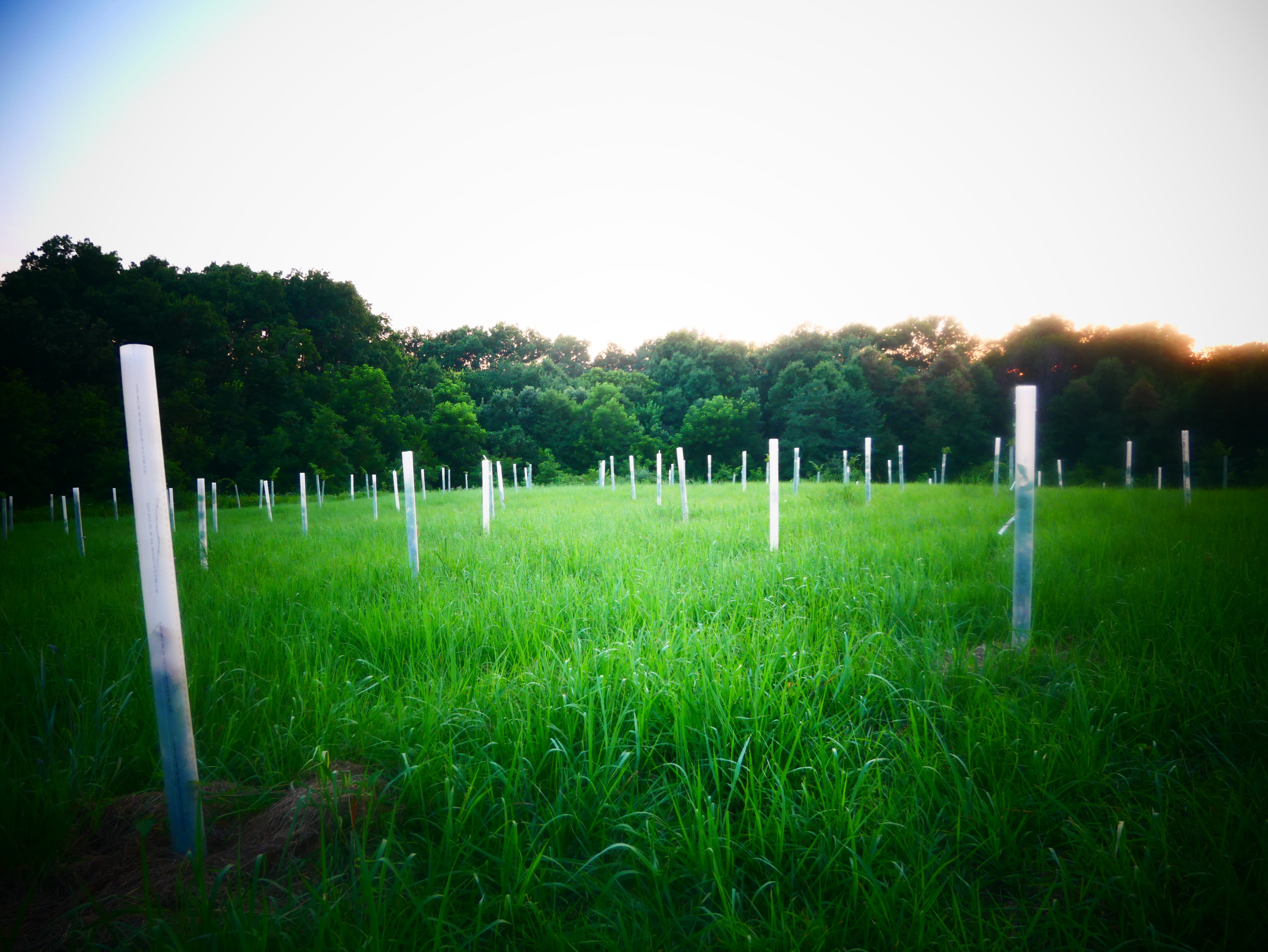
The drab little spent blooms of tired elms fleck the churning skin of the earth, slowly assumed into the digestive tracts of earthworms. The cycle of birth and decomposition reconvenes, relentlessly grinding as last year’s prairie seed bursts in the silence of soil. Down in the bottomlands, where the sleeping grasses gradually return to life, we are preparing for our next planting, lining out rows of fiberglass stakes representing willow and hickory, persimmon and oak. To raise a crop of trees is to farm in four dimensions, to take our two dimensional maps that translate to little more than “stems per acre” and extend the conceptual into the realms of elevation and time. We are doing more than laying out a crop– we are feeding complex interactions between shade and sun, soil and root, fungi and protozoa and squirrel and cow and human being. Perhaps, we are even building a different, collective culture, so long as new caretakers step in when our time here goes the way of worms and spent blooms. But like I said, I’m a very ambitious person.
Collective survival requires either a critical response to inherent danger, or an unlikely investment of faith in other humans. With civilization teetering somewhere between gradual failure and sudden, incomprehensible horror, planting a couple-hundred trees every year seems a bit quaint. But that’s the beauty of this particular tree planting scam– it provides simple, joyous work, in spite of whatever storms stand billowing on the uncertain horizon.
The nanny goats bask in the few moments of intense sunshine we’ve been allotted for the day, their babies warm and frolicking. The cattle sniff grassy air, and the hogs snuffle in the shade of cedars, in bliss and ignorance. As stewards and human beings, I don’t think we can afford the luxury of ignorance, but if our work is to have some meaning, it may as well be so fun you’d do it for free.
As a follow-up note, here is a link to an article I wrote a couple-few years back when the whole agroforestry “co-op” got started. To be clear, we are not legally a cooperative at this time. Ideally, when the time is right, we’ll pick an organizational pathway that meets our shared objectives. I would be interested and willing to discuss this with readers sometime soon as part of a “chat” or whatever they call it on Substack… let me know if that’s of interest to you.
I also recently put together this story map to explain the project a bit. It’s a work in progress— all of it. Thanks for looking.
The Fox Holler Almanac is a reader-supported publication— I couldn’t do it without you! Share or leave a comment if you liked it. Hell, leave a comment if you didn’t, though I might ignore it. And if you feel moved and able to materially support my work, upgrade your subscription or buy me a coffee.
Thanks, y’all.
I’m glad I’m not alone with vernal anxiety. Every winter the boulder I push comes to a stop, frozen in snow and ice. As spring thaws, I restart my labor from that dead stop with none of the momentum that I had in my favor the prior year. But if I’m doing it right, I at least have a little more know-how and perhaps the benefits of some systems I’ve put into place in past years. Hopefully, those two combined are enough of an advantage to balance any loss of strength that time deals my body.
I’ve lived this pattern long enough to know better, and yet I still hatch plans every winter for just a few more spring projects while I stare into the hypnotic flames of a January fire.
Great stuff. Hope to join the scam one day. That story map is really cool, nice work on that. When is the NCRS demo day??