
A World Held Together With Twine
Repair, resurrection, and muddy socks

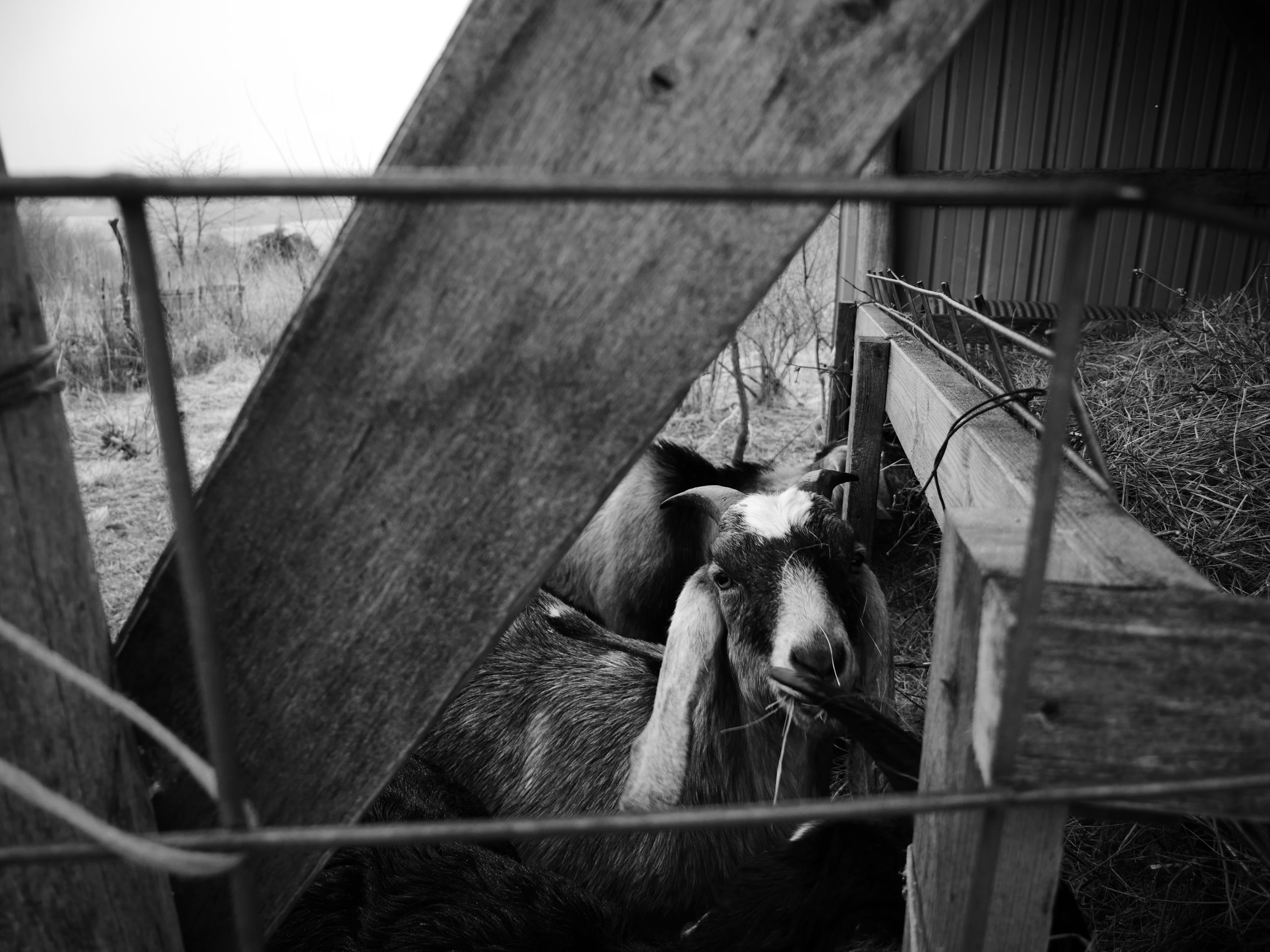
In the aftermath of heavy rains, when the scent of wet earth and wriggling worms collides with the aroma of sugary grass, our animals become restless, if not passionate. Until photosynthesis peaks and the vegetation, spurred on by consistent warmth, is able to utilize and absorb the excess rain that saturates the ground, we act as responsible stewards to limit the impact of livestock on this fragile landscape. The cattle are kept on hay in their barn with a small but adequate loafing yard, so that they cannot trample, compact, or ruin the infinitely complex and dynamic balance of the soil we’ve worked so hard to repair all these years.
Instead, they tromp out along the fenced edge to inhale the sweet scent of fresh pasture. It will only be a matter of days before they’re out grazing, as we have but days of hay remaining, but for now they must stomp discontentedly along the small tract of sacrificial ground that churns with hoof and mud, spent bedding and sweet, life-affirming dung.
The fence itself is an underbuilt, if mostly-functional, mosaic of scrap cattle panels, salvaged welded wire, and fifth-hand T-posts, woven together with an amalgam of frayed twine and rusted baling wire. I’ve seen prettier fence for sure, but the aims of our little operation tend to disregard aesthetic considerations for economic thrift and the intentional reduction in resource consumption. The result is that our farming infrastructure appears to be entirely stitched together by baling wire.
This morning, the air was decidedly too sweet for our cows to ignore. During milking, our youngest calf refused to nurse on his mother (we separate him at night and then use him to get her to let down with her cream before taking over) and instead began to gallop figure eights through the greening pastures, kicking clods of sodden earth, sending gangs of foraging chickens fluttering as he tear-assed back and forth along the damp pastures, pursued by my playful if overly exuberant dog, who has been smeared in cow shit for going on three days. It took three of us to rodeo the joyful calf back into the loafing yard, but not before his big brother, Bobby, decided today was the day for a run as well. Bobby immediately identified a weak spot in our scrapped-together fencing, and in one clumsy leap, took down a T-post and a steer-sized length of particularly flimsy woven-wire.
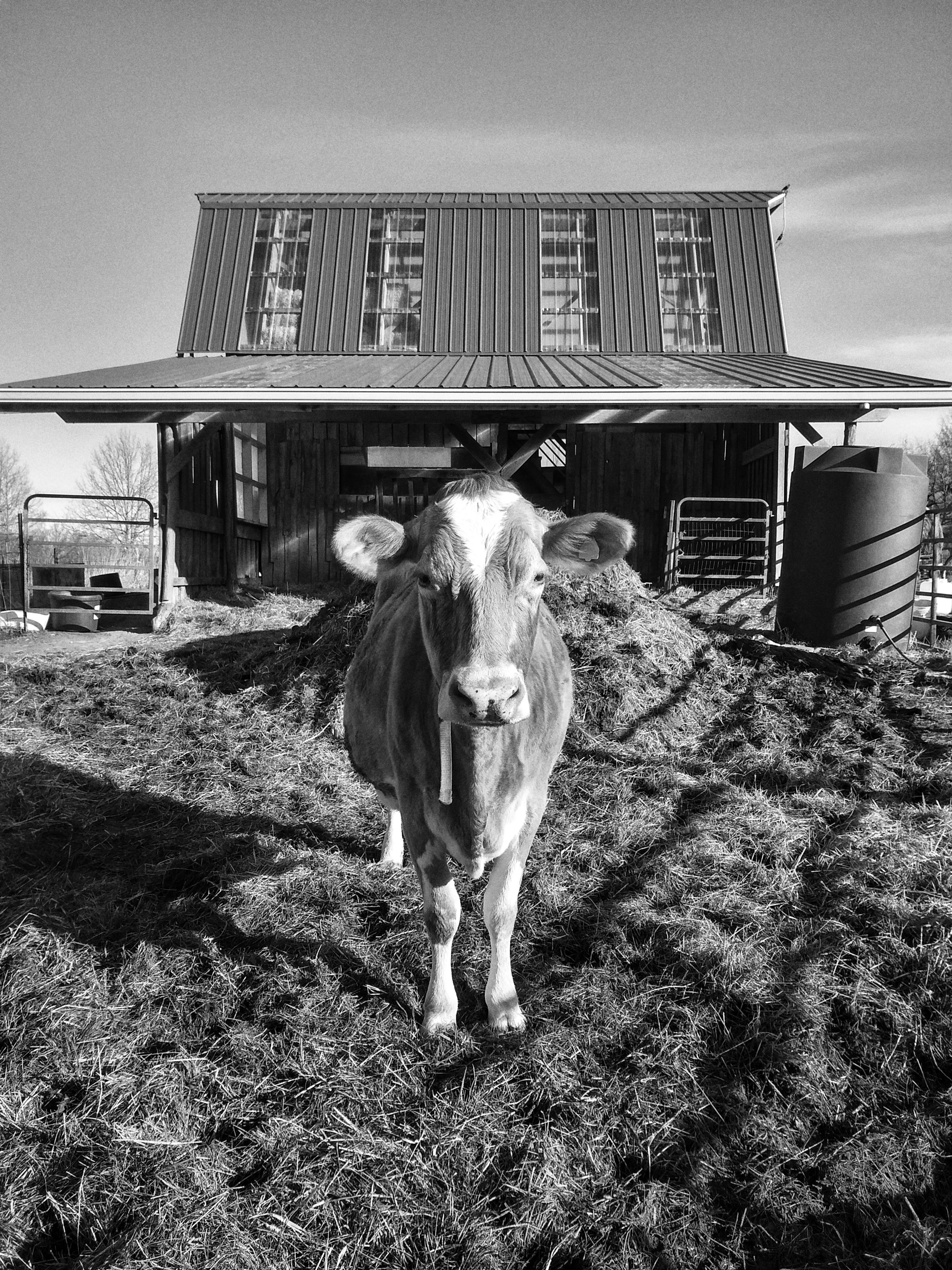
After some minor rodeo work interspersed with cussing, my socks totaled by the thick flows of loafing yard mud (wrong boots today), the cows were corralled, and after coffee, I worked to mend the new gap in the fence, making it perhaps stronger than the rest of the entire perimeter.
In an “end times” type scenario, some medium gauge wire and a serviceable pair of lineman’s pliers is going to be the first thing I secure. Luckily, I’ve made it a habit to stock up on these items regularly. I would imagine that across 30 acres of pasture, I have five or six sets of pliers, and half-a-quarter-mile of steel wire in various grades of tensile integrity. Add to that the hundreds of loops of jute twine slung over the stair-rail heading up to the hayloft, the coffee cans of nails and piles of boards with some life left in them, the congregations of partial cinderblocks piled into cairns near old hedge fenceposts, and the relatively tidy stacks of jigsaw-puzzle-pieces of tin roofing, and there is no piece of necessary infrastructure on this farm that I cannot temporarily fix… and as life often goes, the temporary fixes often age into permanence, at least on the human timeline. In a world that teeters on total brokenness, repair is more than a skill– it is praxis, a meditation, and as close as I allow myself to a spiritual pathway.
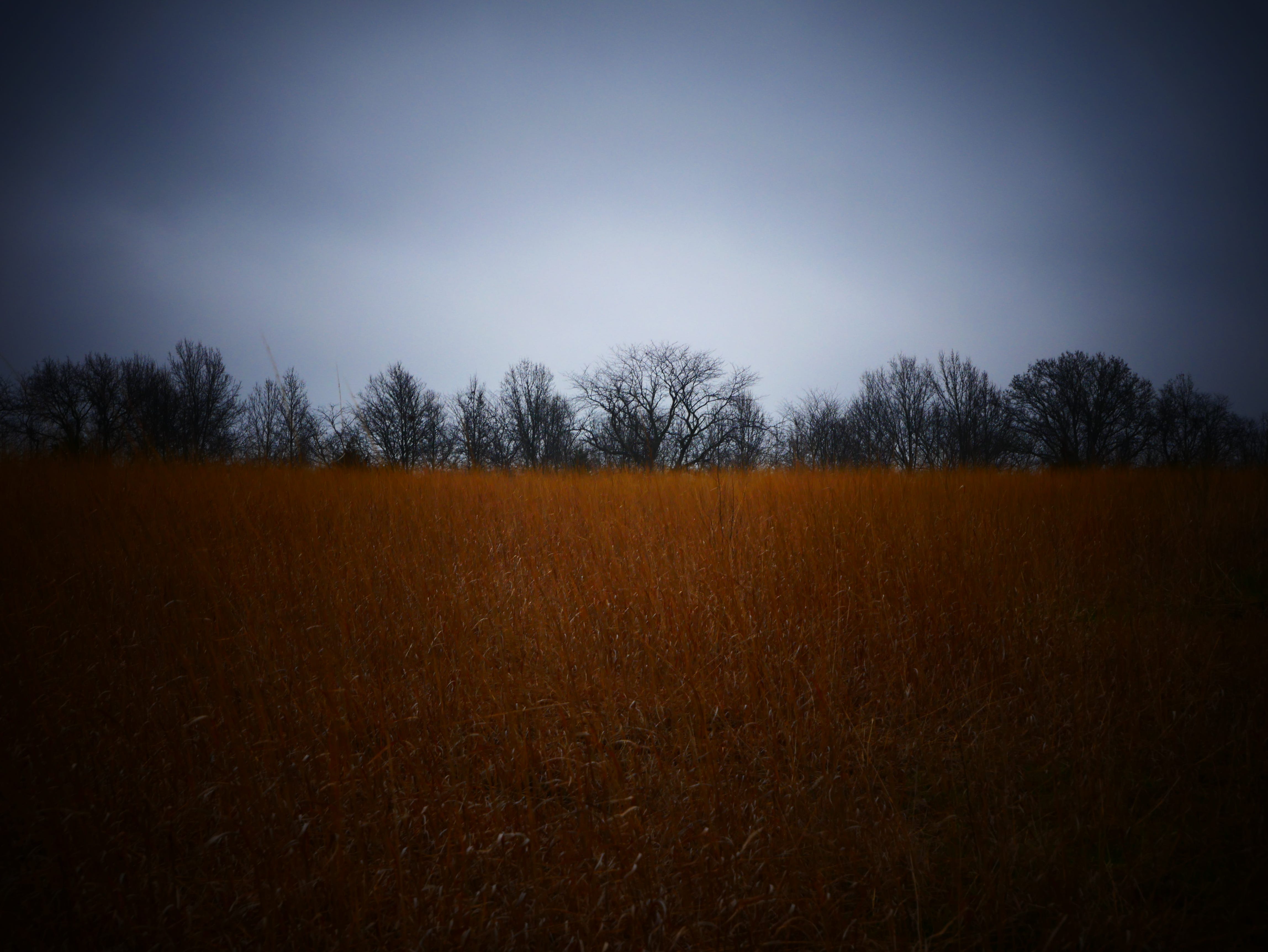
If we exclude humanity from the definition of biotic life on earth, the world has a way to repair itself in the long view, through adaptation. Even if the current death-spiral our species has engineered plays out in the ways I fear, and our climate spins out of control, and the broad spans of continental earth become uninhabitable to anything larger than a tick, and the oceans are chemically altered to the point of massive die-offs, so long as any life-form remains that can split cells, the deeper order of things will resume in due time. Or perhaps it won’t. But my concerns run a bit more immediate.
When my children are my age, even in the best case scenarios, they are unlikely to witness living polar bears or reef-building corals. Orangutans and African penguins will be extinct, and specialized bumblebees and green sea turtles will be unknown trivia of the past. There may be no short grass prairie, or tall grass prairie, or rain forest for that matter. If we humans remain until this time, if we’ve somehow managed to dodge our way out of the geopolitical and eco-material murder/suicide pact we’ve created for ourselves, all but the prosperous few will live through years of pure terror. These are the things I think about while I’m twisting wires between broken fence panels, standing in the loafing yard with muddy socks.
Despite knowing these things, knowing the end point of the path we’re on, I behave like an optimist most of the time. It’s probably a necessary delusion to do so, an instinctive brain-chemical reaction to the stress of impending doom– as nude, fleshy creatures without claws or fangs co-evolving with dangerous megafauna, the ability to cope with our improbable odds at survival might be the distinguishing factor between humanity and our fellow beasts.
We are not unique in our tendency to purposely manipulate our environment –go ask an ant or a beaver– but I would argue that our vulnerability as a species has given life to one particular skill, beyond delusion, which we express uniquely: repair.
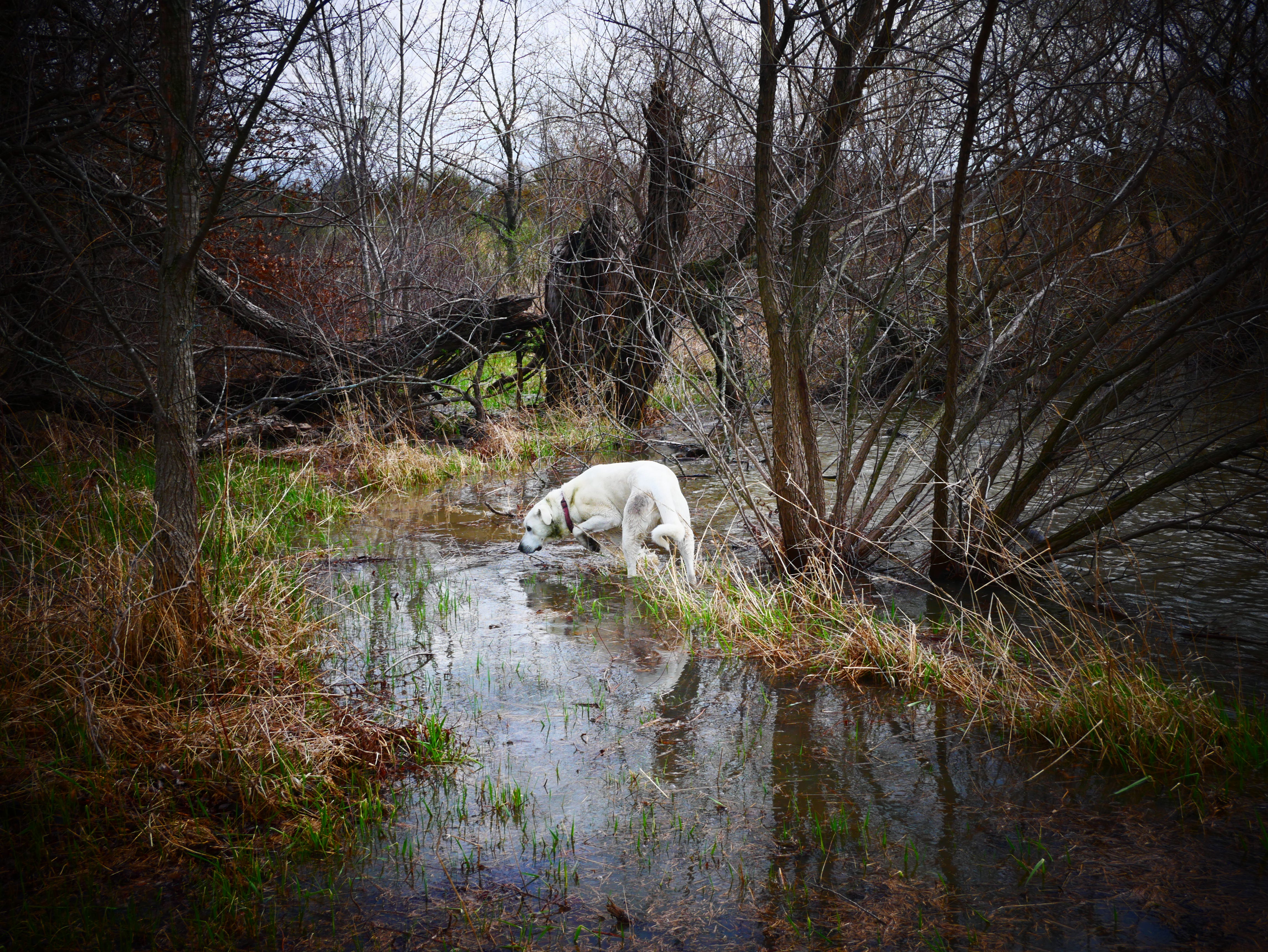
In the aftermath of the recent deluge of rain, I traipse carefully through the delicate, sodden bottomland prairie to investigate our creek. Recently, I’ve committed myself to become more aware of our watershed, to take more responsibility for it, or at least build some kind of relationship with it. After months of freeze, drought, and stagnation, the Long Branch is running high and cloudy, undoubtedly turbid with the lost soil of extracted landscapes upstream. The water rushes over riffles and knit-together rafts of lichenous branches, foaming as it crashes through the muddy limbs that weave the creek-bank tightly –for the time being– like looped and knotted baling wire, as if the trees have offered this little stream a gift of deadwood to aid in slowing the violence of floodwaters.
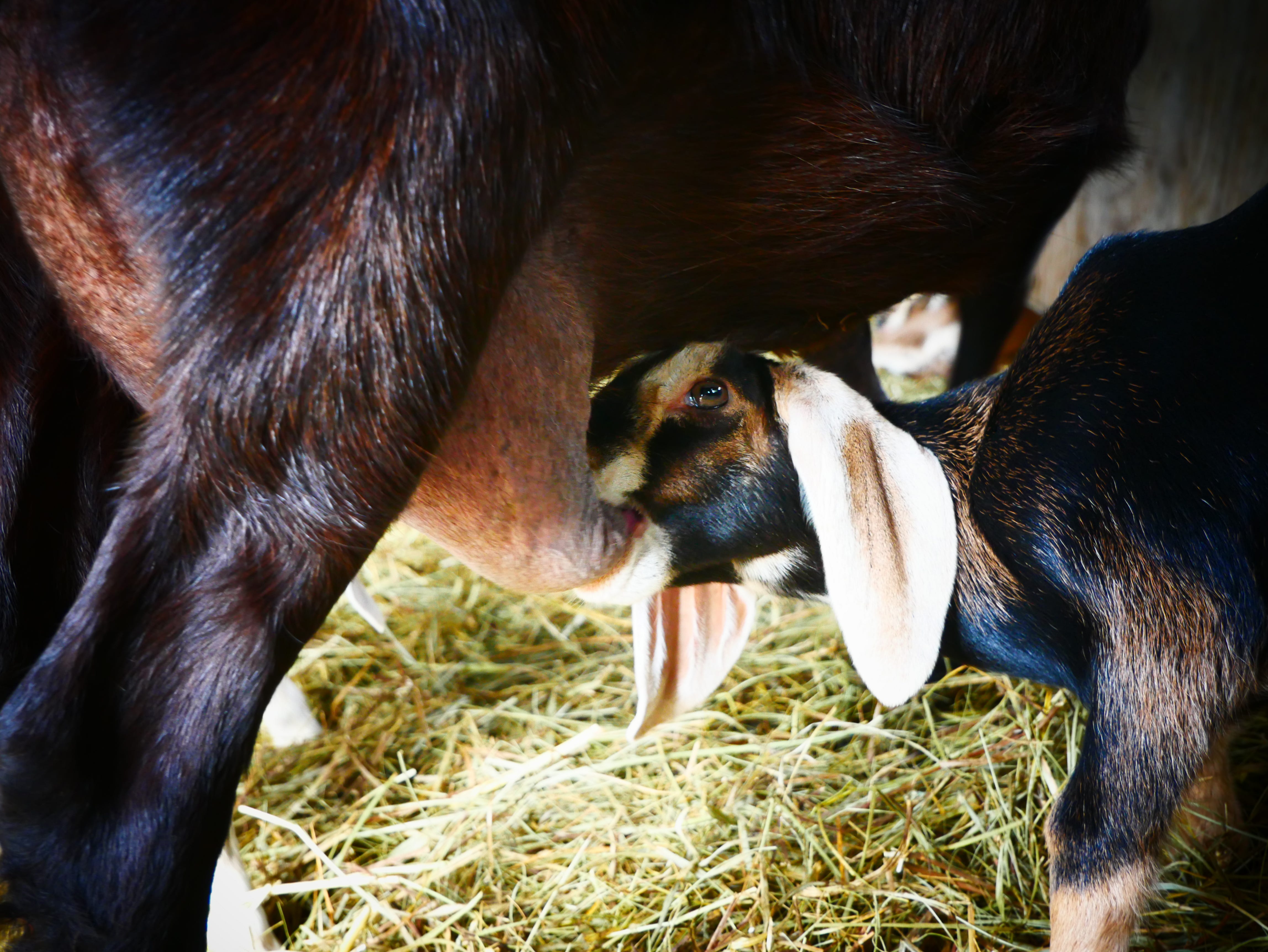
In the gradually receding puddles of rain that flicker with wind and sunlight, terrestrial crawdaddies –with crawmommies and their little crawbabies on their backs– excavate muddy cathedrals, moving to higher ground of their own construction as they purge the inundated clay. A red-winged blackbird tucks fresh thatch into a storm-damaged nest, gliding hither and yon for salvaged scraps of last year’s grass. Dead stumps sprout fruiting bodies, and the prairie muck shimmers with young, green growth. Hummingbird bees feed at the spring beauties between storms, calves and kids feed at their mothers in the shelter of their barns, and at night you can hear worms crinkling beneath the wet leaves. Resurrection season is arriving, if only I can keep the fence mended another week.
Standing with muddy socks in the loafing yard, wrapping wire round the oxidized forms of fifth-hand T-posts, I feel it is important to note that I’m not hoarding the pliers or the wire. I maintain a collection because I’m careless and forgetful with tools. I’m not even that great at using them, but I’m doing my best to fix everything I can, in order of urgency, beginning with the cow fence. I moved our pigs to higher ground in anticipation of the rains, hoping they would knock down last year’s thatch without disturbing the soil too much. This morning, their paddock is laced with muddy tracks, and so my next job is to soothe the dirt with seeds and spent hay and a sprinkle of biochar, before moving the offending swine somewhere less delicate– perhaps I’ll find some of my wayward pliers back behind the buck-goat shed after they’ve grazed it down.
I’m not hoarding the pliers so much as holding onto them, refining my own repair skills, until I can hand them off to the next generation of fixers to hold the perimeter. I hope that whoever inherits them doesn’t mind the rust, nor the mismatched wire, and I hope they believe I left things good enough, in this grass-sugar stillness between spring storms. At my most optimistic, and delusional, I sometimes hope to leave them more– some grand engineered plan to re-route the violence of a world in tailspin. And maybe that isn’t impossible. But if we’re to move beyond the next half-century as a species, a lot of us are going to have to get our socks muddy and learn how to twist wire… focus on repair and leave the resurrection to nature.
The Fox Holler Almanac is a reader-supported publication— I couldn’t do it without you! Share or leave a comment if you liked it. Hell, leave a comment if you didn’t, though I might ignore it. And if you feel moved and able to materially support my work, upgrade your subscription or buy me a coffee.
Thanks, y’all.
Mending the world one plier at a time.
As a fellow farmer I share the feeling that if something cannot be fixed with bale string - billy band as we call it in Yorkshire the greatest county in England - only then is it truly broken!
Cheers
Brads