
Dog Days
Blaming it on the stars

Scrolling through headlines before the onslaught of morning chores, I read that in France, where a blistering surge of heat rolled over the country last week, 1,000 additional deaths over the average were reported. At least 40 people drowned during the heat wave—inexperienced swimmers seeking an escape from the unrelenting conditions. Two European Union Earth observation services, the Copernicus Climate Change Service and the Copernicus Marine Service, independently confirmed new records for Atlantic Ocean temperatures for June. The director of the CCCS stated that they were confident ocean temperature records would continue to be broken through the year, on account of El Niño. I slid the sweaty phone into my pocket, its battery already overheating from the ambient temperature in my bedroom, and slunk into the dewy swelter of early-morning Missouri, unperturbed by any suffering but my own.
The air is still and warm in this dark room where I’m writing, but not unbearable, like the attic room where I usually write. I like the view from my usual writing desk, where I can look out into the arching boughs of Osage orange and watch squirrels scamper along the swaying branches, nibbling slivers of kernel out of the growing pile of discarded walnut shells I’ve been working through since November. Today, while mixing together a porridge of rainwater and grain for the chickens, I watched a squirrel splay itself out on the bending branch tips of a silver maple, wilting in the fiery breath of a disturbed atmosphere, catching the sharp wind across its body, panting.
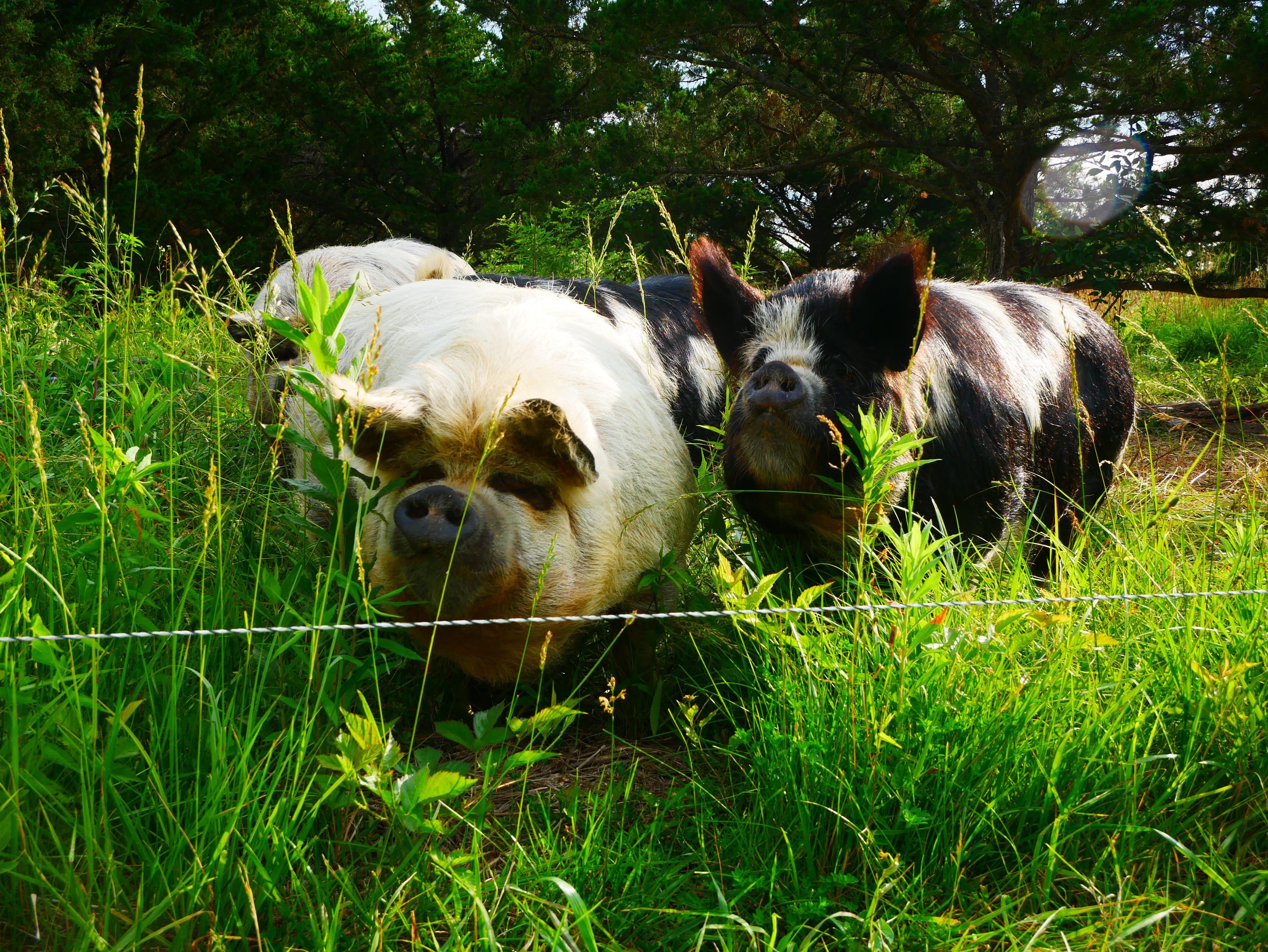
In the course of morning chores, when the temperature is as cool as it’s going to be, I sweat through two shirts, four socks, and a pair of pants, my body splattered in a fine patina of salt, pollen, and filth. The walk out to the sows is entirely without shade in the morning sun, and long. I’m running them along a wooded, north-facing slope where they can wallow beneath the thickets of pin oak sprouts. They breathe heavy, and act impatiently when I arrive with their ration of food and water, squealing greedily, and with irritation. This heat can generate a lot of anger—I’ve seen it in myself.
This particular pig pasture was chosen strategically. The dense cover and northerly aspect is as cool a place as I can provide to these temperature sensitive beasts. I am letting them waller in the underbrush, crushing and rolling the vigorous crop of poison ivy that has strangled its way through the wire cages placed around selected hazelnuts and white oaks planted here (I’ve heard it said that poison ivy is one of the plants that benefits the most from an increase in atmospheric carbon). It is also next to our swimming hole, which I can use for my own temporary relief. It releases some of the grime and sweat from my body, but by the time I make the long trek back home with my empty buckets and tools, I am again covered in a new layer of it.
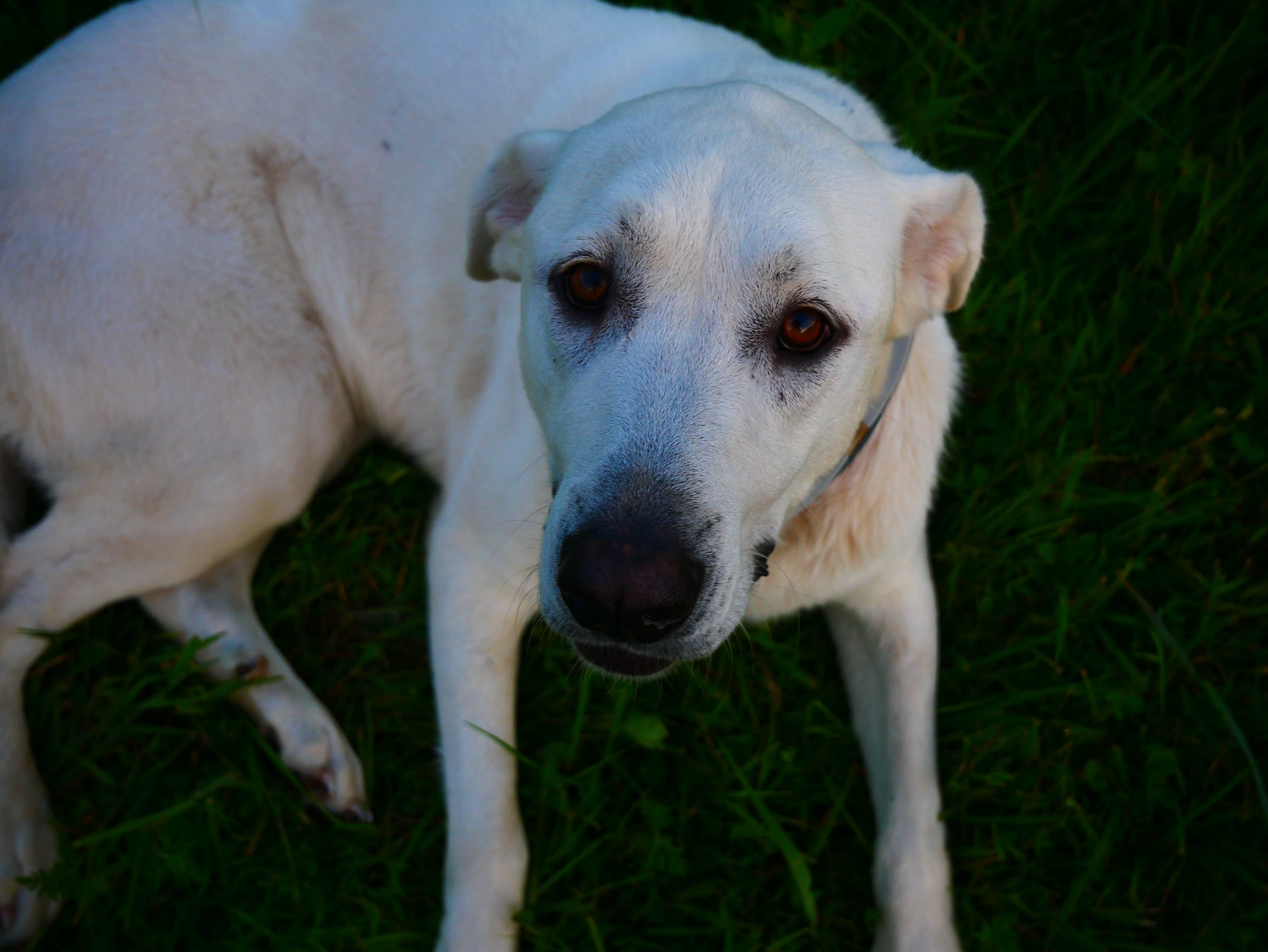
At home, I pull the damn phone out of my pocket again, the screen fogged with sweat, the battery sizzling. I open my weather app and close it before it loads. No sense in looking. The same goes for the news—headlines like “Nearly 200 million under heat alerts this week”—I toss it on the table, next to ripped-open seed packets and empty jars, peel off my sweat-soaked clothes, and hang them in ceaseless, angry heat. Wanda, our youngest livestock guardian dog whimpers at the door, and I let her in to flop down on the kitchen floor. Our other two working dogs are passed out in the shade of elderberries, their fur sprinkled with wilted flower petals. Astronomically speaking, July 19th begins the “Dog Days” of summer, when Sirius, the “dog star” rises in the east, in this hemisphere at least, though others list July 3rd as the definitive start of the period. Depending on if you operate off a Julian or Gregorian calendar, or if your astrological beliefs allow for the star’s influence before its actual appearance in the sky, the time-frame shifts around a bit. Of course we now have climate observation tools to determine more accurately the cause of extreme heat on our planet, but divination by stars is still more convincing in many circles. Personally, I’d contend we crossed into dog days territory about a week back, judging by the splots of drool left in pools across the floor as Wanda pants and salivates, exhausted and indifferent to the wilting world.
In ancient Egypt, Sirius’ ascent portended flood-season on the Nile. The Greeks associated it as the precursor of particularly uncomfortable heat and fever. In the logic of the time, they believed the star itself brought this heat with it, and in Homer’s Iliad, the return of Sirius, with all its wrath, is used as a metaphor for Achilles’ approach toward Troy to slay Hector:
Priam saw him first, with his old man’s eyes,
A single point of light on Troy’s dusty plain.
Sirius rises late in the dark, liquid sky
On summer nights, star of stars,
Orion’s Dog they call it, brightest
Of all, but an evil portent, bringing heat
And fevers to suffering humanity.
Achilles’ bronze gleamed like this as he ran.
I may not be clad in brilliant, bronze armor, but I do carry enough filth on my body to tell you a few things about heat and wrath. For one, when the weather goes sideways like this, humans love to find convenient explanations, or even personify it. Maybe it’s easier, when people are dying in it, to believe it comes from a star that regularly enters the night sky, or a God who tests us. But we’re failing the test. The heat isn’t an enemy to defeat in battle, or our anger made material reality. But perhaps it is an evil portent, a symptom of our own actions and inactions.
At mid-day, the turtles have all buried themselves in shallow, muddy graves. The hogs are snoring on their sides, their bellies streaked with dirt, twitching as flies repeatedly land and take off from their hot flanks. The tips of the maples curl in a bit, and the panting squirrels are nowhere to be seen. My phone buzzes another heat advisory, continuing for the next 96 hours. The wasps are all active, and defensive of the nests they construct— searching the toolshed for a particular pair of pliers, I disturb a new colony, and they swarm my body, stinging my back. And I howl and cuss about it. In common folklore, they say the dog days not only portend heat, but anger, lethargy, madness in dogs, and bad luck. The crime rates in major cities usually do peak around these times, but all the dogs seem too lethargic to be mad.
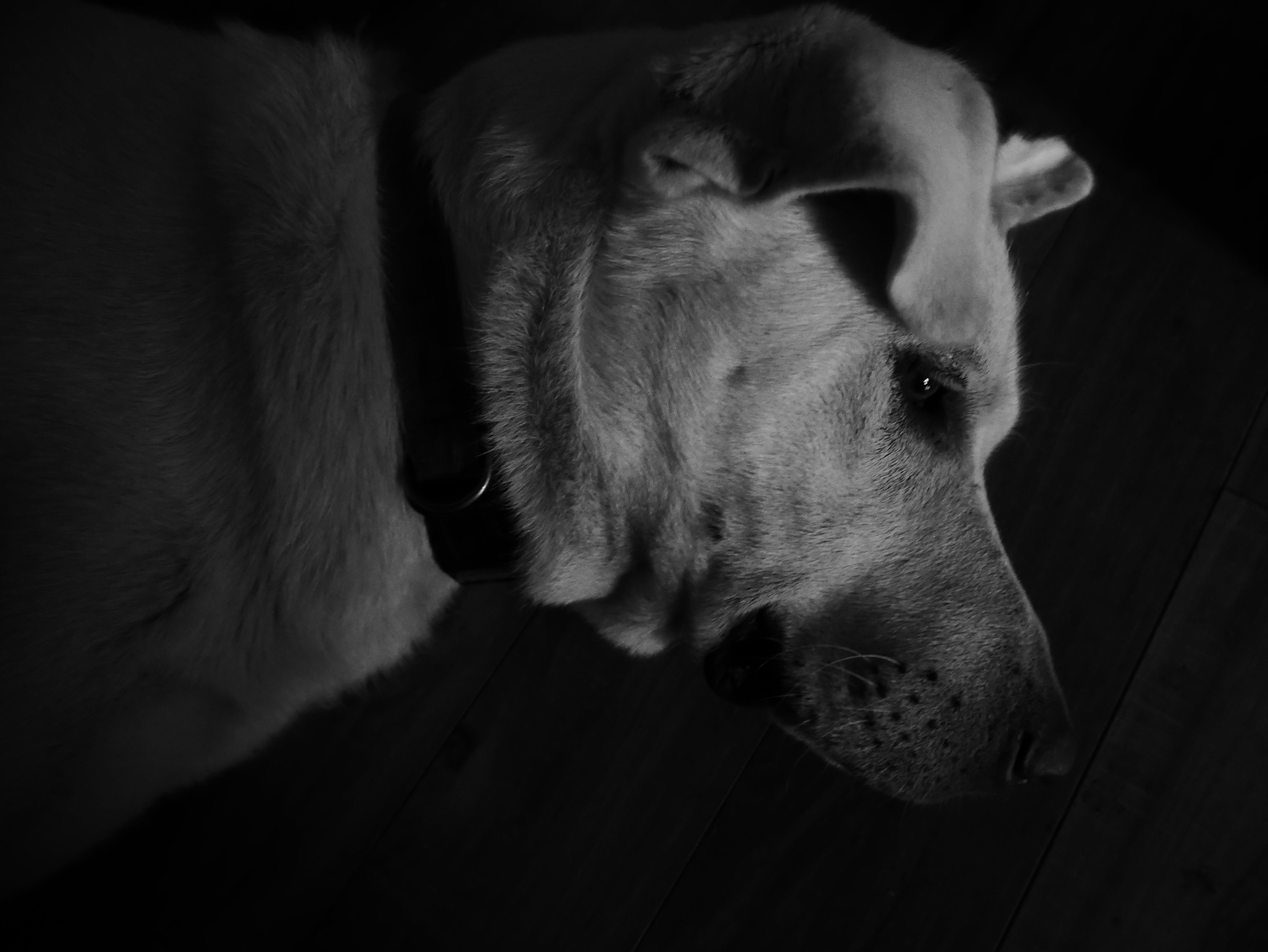
The flip-side of all this anger seems to be indifference. I understand the indifference of dogs. When Wanda is too tired to patrol, and she comes into the house to drool and pant and absorb the coolness of the floor, she’s just trying to survive—even if she’s a bit spoiled. When dozens drown in the Seine because nobody in Europe has air-conditioning, what we are seeing is desperation. But here, in this nightmare country, with the highest density of wealth and refrigeration on the planet, nothing changes, except for the planting dates and the electricity bills. Is it that our access to comfort creates indifference? When I harvest garlic in the sultry haze that hangs around even at sundown, or walk the burning ridge-line out to my hogs, or, God forbid, use my outhouse in the afternoon, I get hot—and I get angry. And my anger sometimes moves in the wrong direction, like branches and wheelbarrows and people and animals, or the amorphous, bodiless form of the atmosphere itself. I suppose, I could even blame it on the stars—a futile, fruitless anger.
But perhaps, there’s a better place to direct all this fury. Maybe when these oaks and hazels have broken free from the twining chains of poison ivy, releasing their seeds down into the draw to be passed along floodwaters into the rich alluvium of abandoned bottomland farms that are no longer economically viable to cultivate, and the air-conditioners black out because the power to run them has all been diverted to speculative data centers, and the dogs are driven mad in the heat, maybe then, we will take vengeance upon the villains who have scorched this wilting world—the small population of men, who with all they’ve amassed, will ultimately be unable to insulate themselves from the fire they’ve lit. Or they’ll take off to a new planet to exploit and leave us here to drown and burn. I can’t reach those men now, nor is it advisable to put into print what I would do if I could, so here’s my plan, for in the meantime: predictably, I think I’m going to keep planting trees.
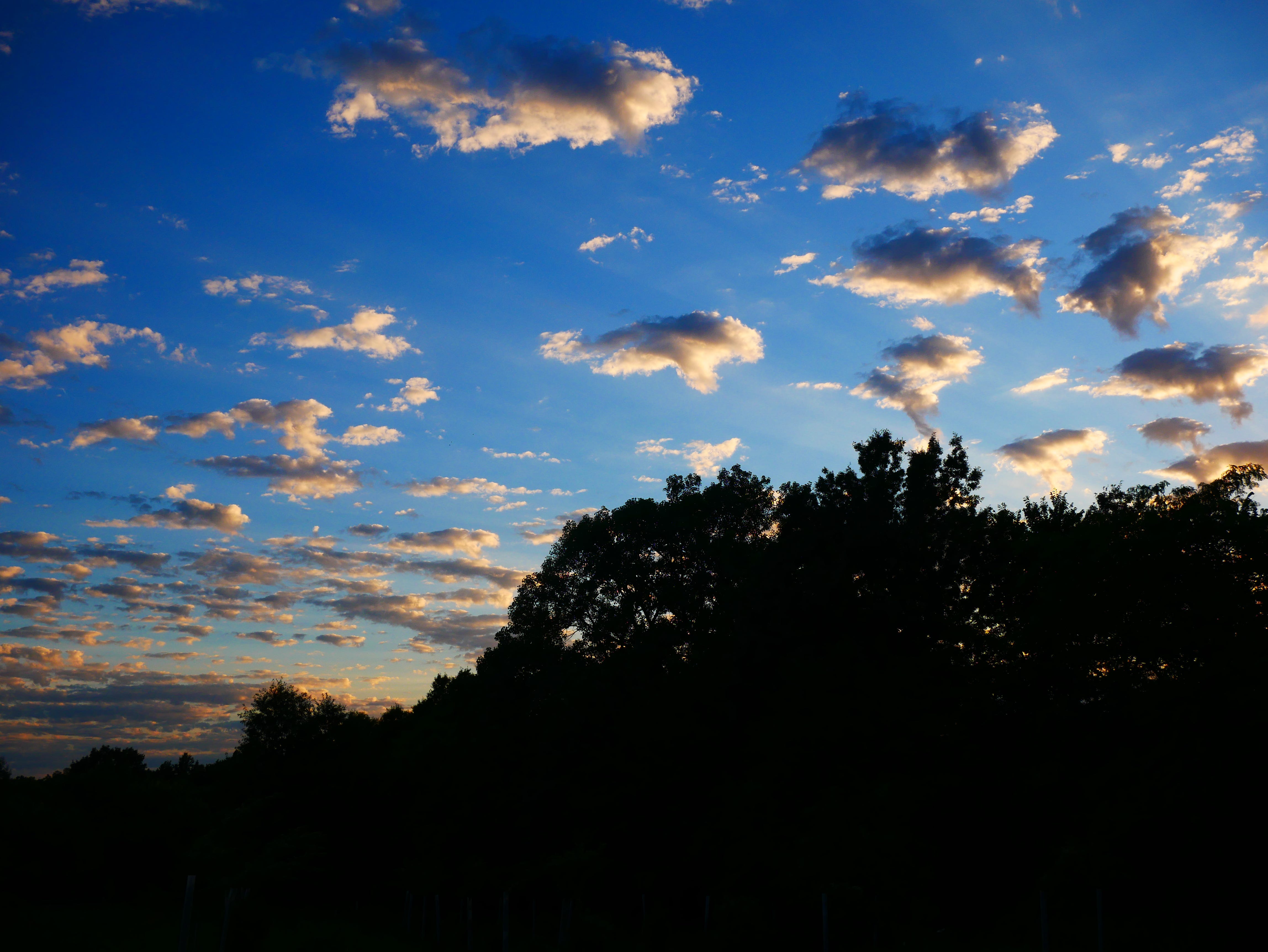
In the evening, when the air stills and the temperature drops a few degrees, and all the world smells of harvested garlic and damp earth, the bats come out and hunt for mosquitoes. While the mosquitoes are a given, I’m sometimes surprised to remember that I still live in a world with bats, and fireflies. The pigs are snoring, content in the embrace of pin oak thickets, after another day of indifferently working to cultivate a small bit of food-bearing habitat in their darkening pocket of Missouri side-hill, and the maples breathe out, releasing their crooked form, just a bit, in the gathering dew. And as sure as anything, that dog star will rise again, cold and blind to the choices that our species makes, leaving us here in the dark to figure out how to wake up and live through it all again tomorrow.
The Fox Holler Almanac is a reader-supported publication— I couldn’t do it without you! Share or leave a comment if you liked it. Hell, leave a comment if you didn’t, though I might ignore it. And if you feel moved and able to materially support my work, upgrade your subscription or buy me a coffee.
Thanks, y’all.
Can you borrow the cave?
The last few lines...love those. And of course the brutal truth is that for as sad, dark and scary as it all can be, "living through it" is the greatest gift. There is almost too much suffering and rage to bear sometimes, but 'almost too much' isn't too much. Keep planting those trees! A channel for your grief and anger to run somewhere cleanly.