
Holding Ground (part one)
On the spirit of honey locust

In the stillness between storms, with the heavy air full of robin-chirrups and chatters, churrs, rattles and scolds of industrious house wrens, I sneak between the thunderheads to fulfill my animal husbandry duties: shrugging through the cool, dripping leaves of pin oak stands to slop hogs, wading across waist-high grass to set new paddock fence, and traipsing under storm-tossed sprays of elderblow to feed the growing flocks of chicks and ducklings in their shelter, the creamy, stellar blossoms dropping into purple-black mulberry manure like constellations on the soil surface. After a hot, dry May, June has been mostly mild, mostly adequate (if not overly so) in precipitation.
I’ve been through the ringer this month, performing those basic social/human tasks that don’t merit much in the way of prose, and I’d like to think I’ve handled it well, and not been too sharp with anybody, except maybe once or twice. There have back-and-forth trips to Columbia for my daughter’s art camp, days spent preparing for educational events, lots of deskwork and communication with assorted people in relation to work, book projects, logistics, grants, and budgets—the sorts of things I’d never imagined for myself in those salad days of bike rides, dumpster dives, minimal responsibility and an even more depleted state of hygiene. I don’t think about these things much anymore, except perhaps in those rare moments of stillness.
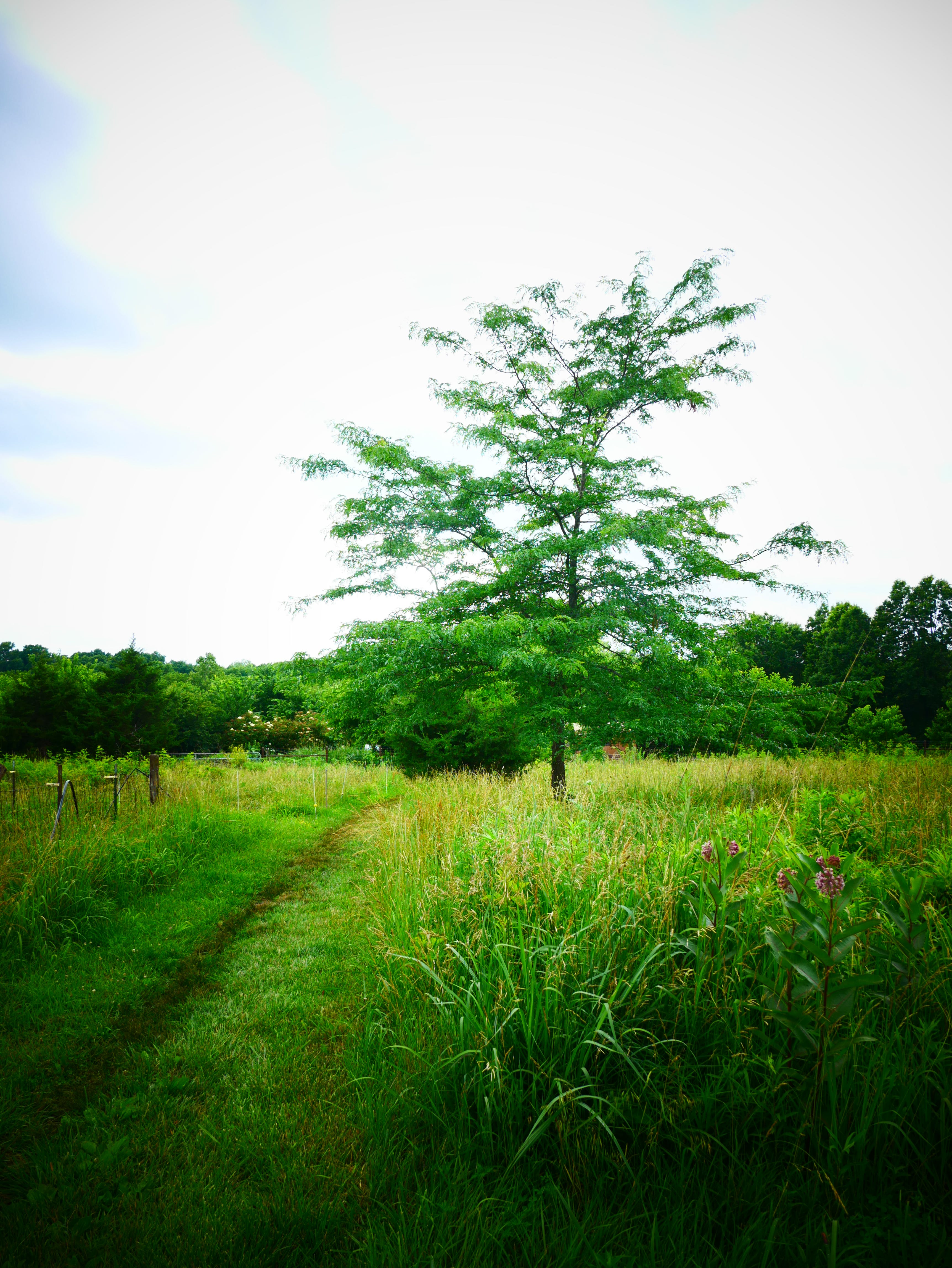
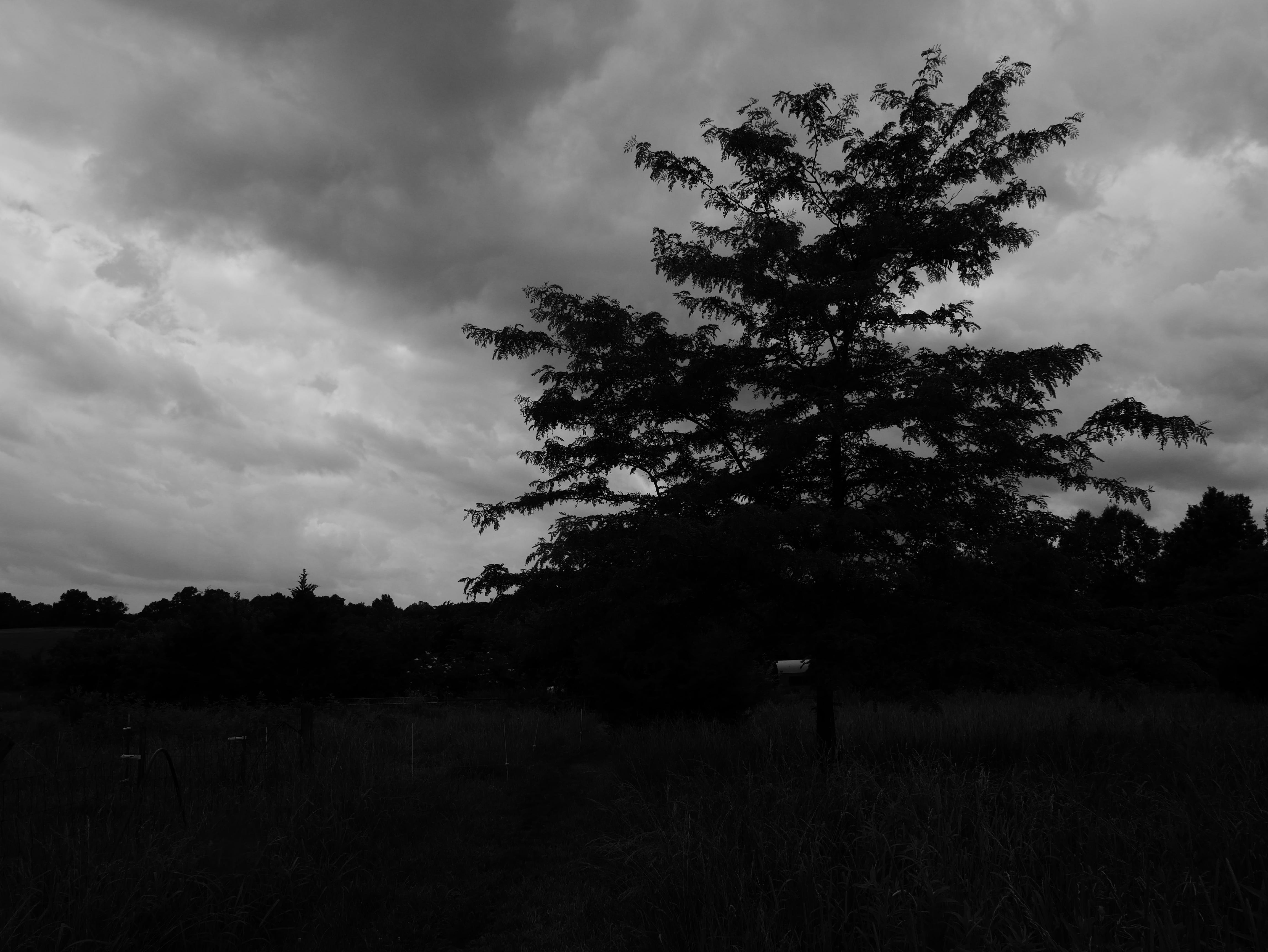
On my chores route, ascending a gentle slope with my trusty wheelbarrow, burdened with buckets of grain and baskets of eggs, I can see a dark form rising— a mountainous squall-line of storm clouds, black with rain. In progression, from far to near, the tops of distant trees whip and murmur in the approaching wind. The cottonwoods flutter, the silvery undersides of their leaves flashing, and then the oaks shudder and wail. They say not to stand under a tree during a thunderstorm, but I’d rather risk it and keep slightly dry, mostly on account of my currently dire laundry situation, so with baskets of eggs, I shelter under the nearest one: a finely formed, early-middle aged honey locust I’ve developed a camaraderie with over the years.
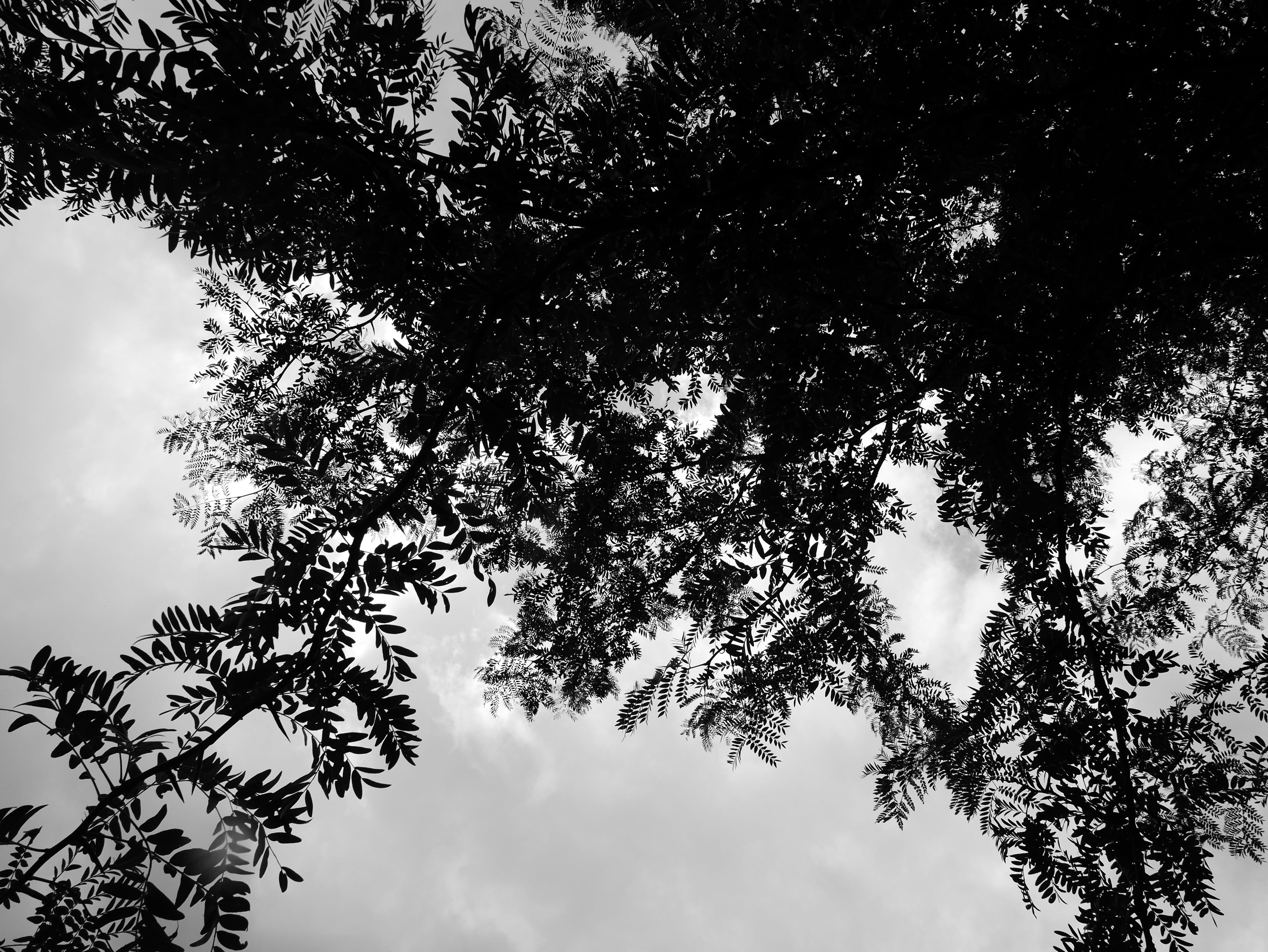
Now, honey locusts are not the best tree to stay dry under. They have fine, pea-like leaves that might break the rain up a bit, but do not form a solid umbrella. The highest density of cover under a honey locust is near the thorn-lined trunk, and in stiff winds, the flexible, spiny limbs are liable to flap wildly about, ready to snag clothes, puncture flesh, or perhaps impale my tender eyeballs. In my experience, the youngest honey locusts are the most fiercely armored, their spines hardening over the growing season from floppy green to sharp red to a steely black.
The thin bark of honey locusts is particularly palatable to browsing animals like deer and goats. Perhaps, like its young pods, it has a rich, sweet flesh. As a “pioneer” plant, the honey locust sprouts on battered ground, the seeds undergoing scarification within the stomachs of pod-eating mammals, projecting with thorny vigor from last year’s droppings. It is often deposited in degraded landscapes, making it vulnerable to browsing pressure. This is where the thorns come in.
The thorns of honey locust are considered an evolutionary anachronism, that is, a biological appendage developed under different circumstances than our current world dictates. As a child of the Pleistocene, honey locust had to contend with all manner of freaky big animals; mammoths, mastodons, giant sloths, and beavers the size of Buicks, to name a few. Wearing an armor of six-inch spines, the honey locust evolved to contend with the massive disturbance a mastodon could level at other trees, and in exchange for being spared, offered a thick crop of sugary pods, which carried in the guts of these beasts, would beget more honey locusts. This strategy of protection and dissemination was a winner. Eventually, groups of human hunters would wipe out the threatening North American megafauna, but the wiry, thorny honey locust would remain in place, weathering thousands of years of climate shift, natural landscape disruption, and even fencerow-to-fencerow agricultural industrialization.
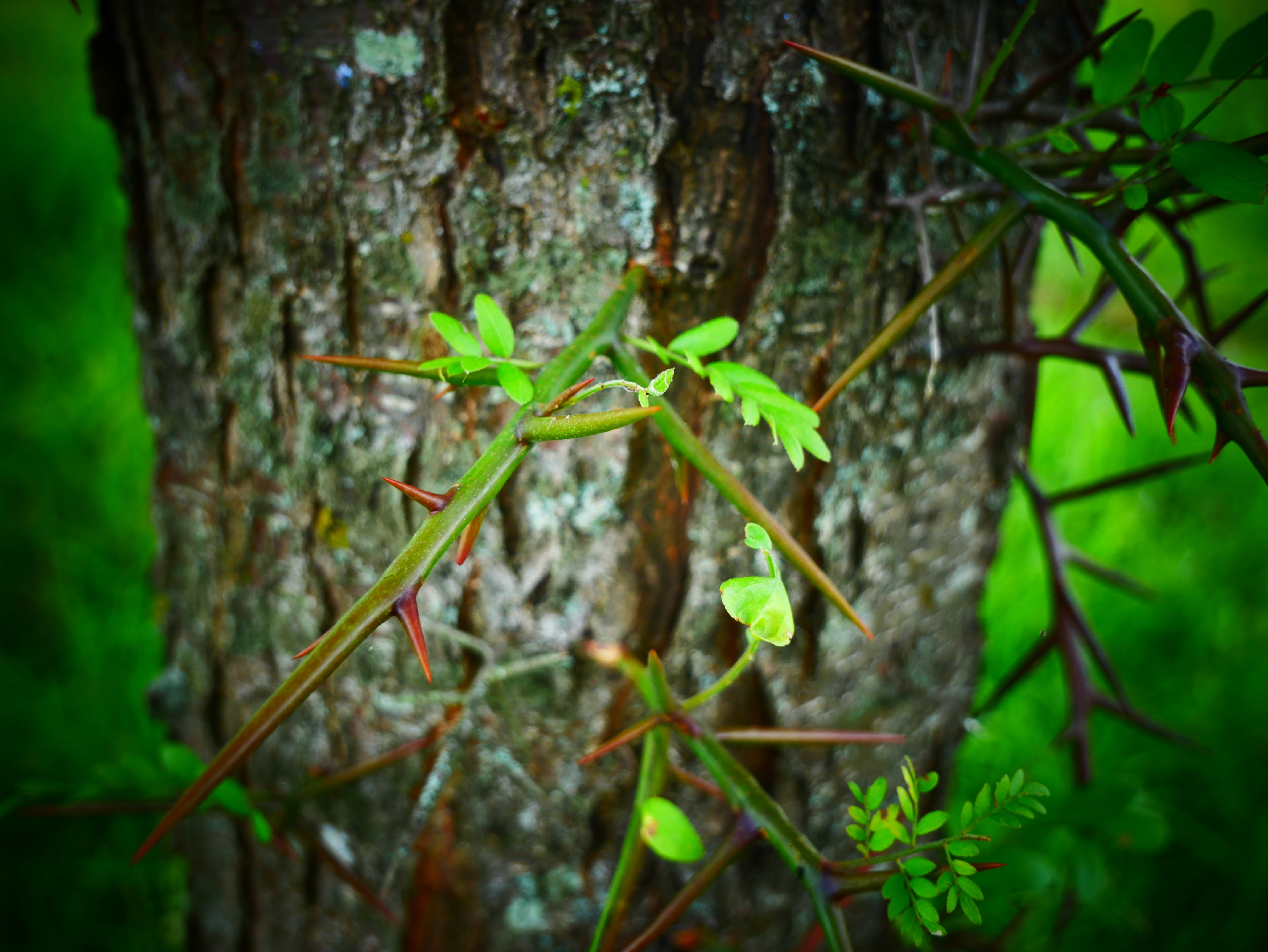
Here in Northeast Missouri, and across the Midwest, the honey locust is, understandably, cursed. The younger trees project their thorns in a wide, defensive stance, making them hard to simply chop out. They sprout in deer shit along old fence-lines and quickly take form between rusted barbed-wire. As they mature, the trunks tend to gradually grow less thorny, but their spreading canopies often dip down to eye level in a sharpened veil of spiny twigs. As older branches die off, clusters of thorns rain in fields and pastures like caltrops, sturdy enough to puncture a tractor tire or send a foolish barefoot walker into the E.R. Granted, they do provide excellent firewood, and in some instances, fine timber for flooring and other uses, but the time and care needed to safely harvest and clean up after dropping a honey locust often dissuades timber cutters. Naturally, as a difficult tree, I love it.
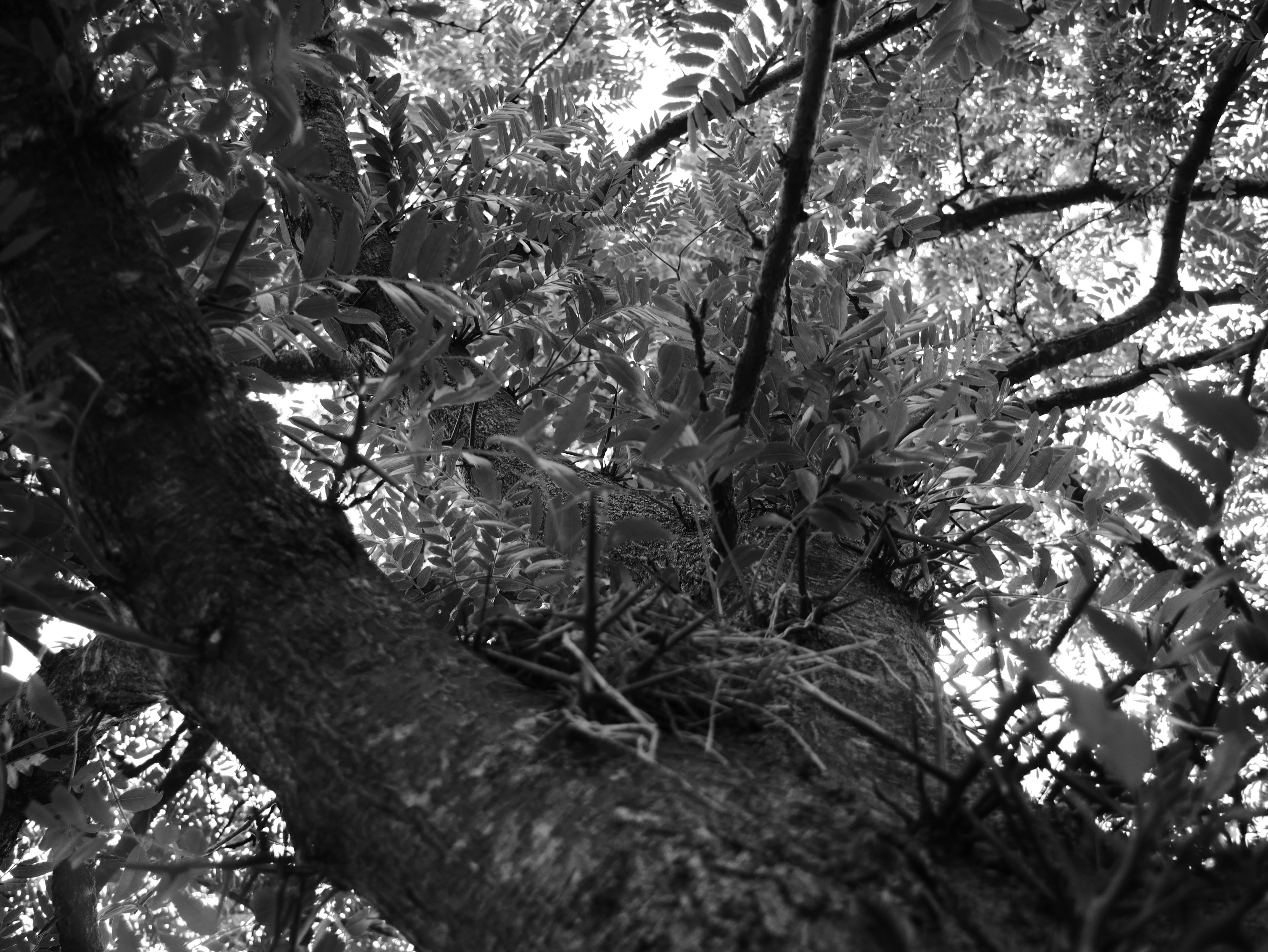
When the rain breaks, I am able to step out from the tree’s thorny embrace, and take a wide view, as it dries in the brief sun and chirruping wind. A robin has nested in a firm crotch near the trunk, safe from tender-footed climbing predators, and as the sun climbs out from the passing veil of smoky thunderheads, the fine leaves cast the most pleasantly dappled shade of any tree, allowing tempered photosynthesis beneath its canopy. While great, wide-leaved oaks and densely branched cedars all but eliminate ground cover with their shade, the honey locust rises from a verdant foundation of healthy grasses, oftentimes thicker and greener than open pasture.
This tree, like myself, is firmly middle-aged, if allowed to live fully. I have pruned it, slightly, allowing the cows to laze beneath it in the summer heat. The goats sometimes congregate here in September and October, gleaning sugary pods from the thick tufts of grass. The thorns are no longer in your face, but they’re still there, formed in a stretching, spiny shield, parallel to the sweet, candy-covered earth. Sometimes, I snip a few spines off the trunk to allow myself a firm spot to lean along, but when under duress from rubbing, browsing, or climate vulnerability, the tree manages to sprout a few more.
When I can, in those quick moments of stillness, I come here to think about my own thorny nature. I grew up in my own Pleistocene, threatened by beasts and men and institutional insanities. In my youth, I threw a lot of thorns. Sharp ones, and on a few occasions, this probably resulted in collateral injury. There’s a list of people, fading and crumpling as it is, who have borne the brunt of my defenses. And I still sprout new thorns, from time to time. If they aren’t necessary to my own survival, I’d like to think they defend others, but sometimes, I’m probably just purposefully being a pain. Call it an evolutionary anachronism.
With the sun now firmly in the banner of sky, those constellations of elderblow and mulberry shit swimming in fresh puddles, and the churrs and scolds of house wren sharpening in the masses of thorns, I grasp my egg basket and move along. There’s much to do, some of it banal, some of it of the utmost importance. Squeaking uphill with my wheelbarrow, pressing myself along the path, boot by boot, I look back at a tree that has held its ground through ages of uncertainty. And looking ahead, toward the next volley of thunderclouds, I hope to hold this same ground, in a darkening future.
Some author’s notes:
A continuation of this piece is in order, but I am finding it best to write shorter pieces for the duration of my summer, on account of seasonal responsibilities… I also suspect readers’ attention spans might be limited this time of year, at least in this hemisphere. Part 2 will be probably be nittier and grittier, as it relates to honey locust / human relationships, climate catastrophe, and resource extraction—classic Almanac stuff.
I am currently deep in a black walnut writing project. If you have solid recipes to share, please contact me! Beyond standard baked goods, I want your weird ideas: ferments, cheeses, pickles… anything that highlights black walnut as an ingredient!
Sharp-eyed readers may have noticed that the Fox Holler Almanac has a new logo. Much gratitude to Csermely Szilvia for the wonderful art!
Finally, as a matter of necessity, our kitchen co-op is hoping to host a workshop on earthen/cob oven building. We’d love to have folks out! For a refresher, I wrote about our kitchen project more or less this time last year, and a lot of folks seemed to like it:
It's Not My Revolution if Nobody Does the Dishes

After many days of tightly scheduled labor –sowing seeds on the slick earth in thunderstorms, scything lanes for travel through the rank and dewy pastures, harvesting berries, and hauling creaking cartloads of grass mulch from point to point along the steaming summer prairie pastures that radiating with the heat of fly-buzz– I have finally sat down to w…
I would be unable to create this work without the material support of readers like y’all! If this essay connected with you in a meaningful way, consider upgrading your subscription, or express your gratitude with a one-time tip. Thanks for reading!
The honey locust post! Love it.
Also, reading these now with a sort of lay of the land is great.
There is a honey locust in my yard here. I planted this tree from seed some years back. Grows fast, survives without watering. Acacia vibe. This one is of the thornless variety though.
I know people who swear by green black walnut hull extract for mouthwash and make it. I've used it a lot myself. There are other more mainstream medicinal uses too.