
I Was a Black Market Milkman
Milk, markets, and metaphysics

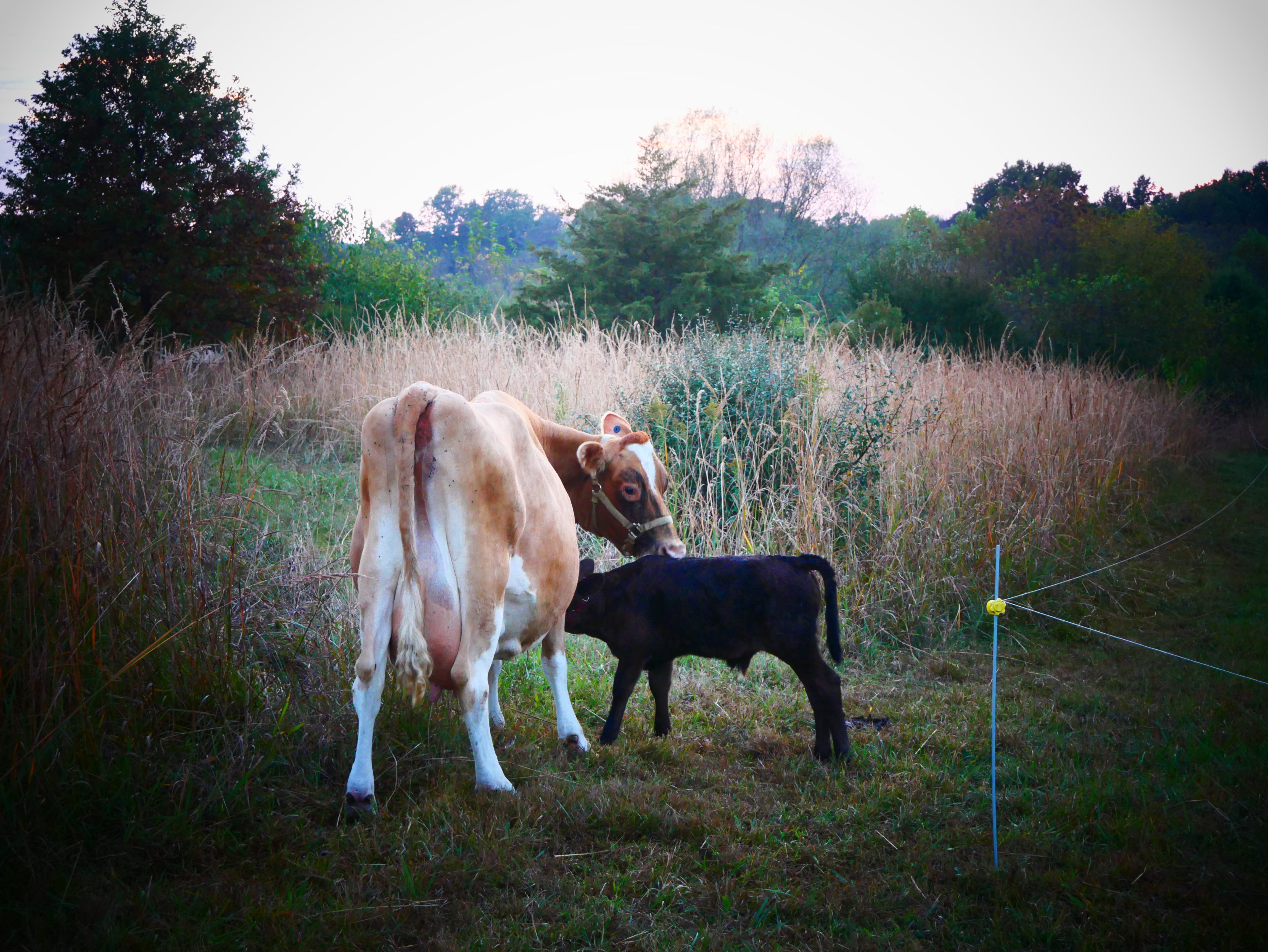
People can get pretty weird about milk.
As mammals, it certainly carries a heavy cultural –if not nutritional– weight. With exceptions (like most things), milk is a keystone component of our most vulnerable days and months; the only pure food we need in infancy. But as we develop into older human beings, the sacred bond between milk-bearer and milk-drinker becomes adulterated by distance. We move from suckling a breast to suckling a bottle– from human-derived milk onto milk from cattle, goats, sheep, or even camels and horses. The distance between where our milk is produced, and where it is digested grows far, and with that, our connection becomes abstracted, and this miraculous fluid, both life-giving, and very much alive, becomes a host to any amount of bacteriological processes, helpful or harmful.
In our industrial world, I’d wager that most folks do not care much about the provenance of their potatoes, or sugar, or apples. Save for the occasional (and likely increasing) e. Coli outbreak, they do not consider the purity or cleanliness of their grocery store lettuce. Irradiated almonds and waxen fruits are below concern. But people do get weird about the milk. We like a strong, funky cheddar, but we also need a flavorless, ice-cold medium for our Captain Crunch. Some of us consume our milk curdled in the harvested rumen of a young goat, others with the addition of pink coloring and artificial strawberry flavor.
With minimal effort, a gallon of milk can become either delicious cheese or a putrid health hazard within a few hours. Entire technological industries have sprouted up to control what is; an essentially living product. Like all ecosystems, humans take a considerable interest in altering the microscopic sea of proteins and fats and bacterial life present in our milk, according to our own (often economic) objectives.
As a person who hasn’t given up on having an intimate relationship with the dairy that I consume, somebody who knows the cows and goats, not to mention the plants and soil which feed their lactation, I view milk production as a necessary miracle for deriving human nutrition— at least in certain geographic and ecological contexts. At its best, the timeless practice of dairying is a wondrous symphonic relationship between people and beasts, grass and dung, bacterial and human culture. If you want to dive deeply into the magic of milk, I have to recommend reading Trevor Warmedahl’s Milk Trekker – because I’m mostly here to talk about the weirdos.
It is often incorrectly stated that humans are the only animals to consume the milk of other animals— the wolf who eats the freshly killed carcass of a lactating caribou would beg to differ, but we are the only species to create taboos around food, not to mention make incorrect statements. Certainly, my pigs, dogs and chickens all love dairy, and the way they lap it up when I offer it, I suppose they’d probably pour themselves a big glass, if they were capable. Some folks are lactose intolerant— I live and eat with a few of these people, and I’ve got to tell you, the struggle is real. Much like dairy is endemic to some cultures, plant-based milks have also played a long and important role among others. But, as often happens, things change, and simultaneous with the uptick of interest in plant-based milks in this late-era of industrial agriculture, raw milk has become more than a re-popularized food in the affluent Western world— it is something of a political statement among the petite bourgeoisie. And this, dear reader, is where things get weird…
