
Juncos and Braceros
On the unnatural fragmentation of human landscapes

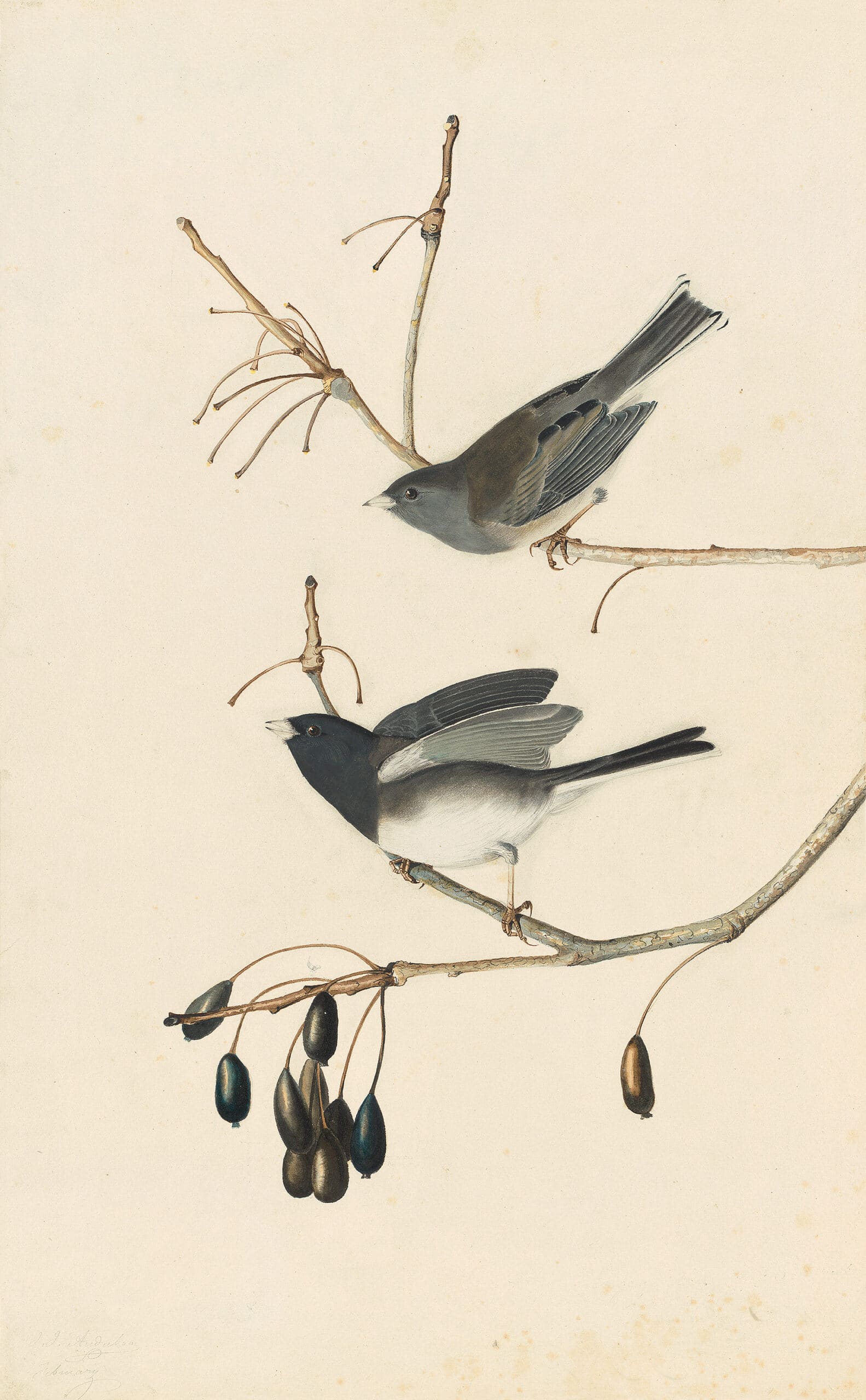
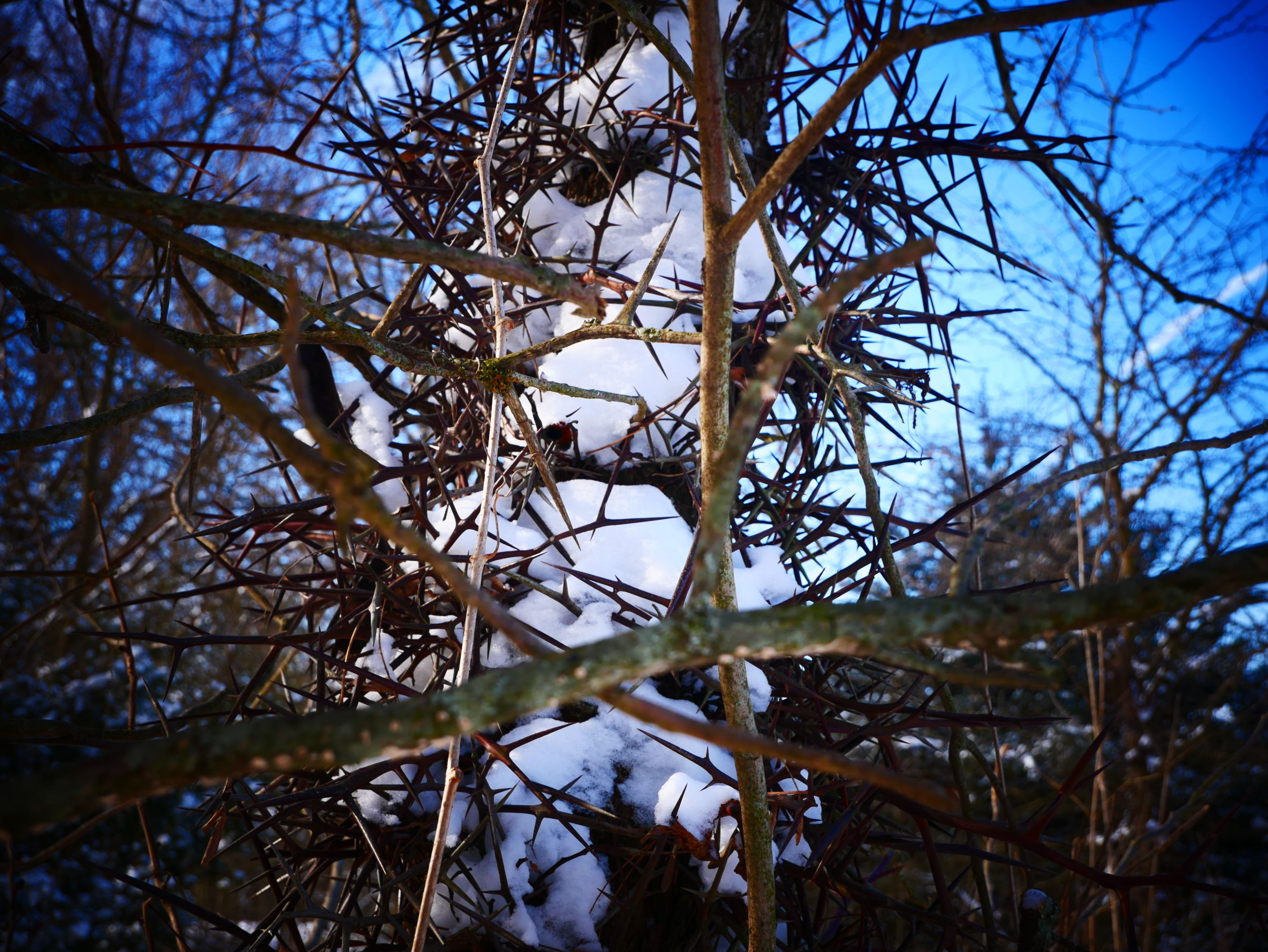
Earlier this winter, before the snow and ice came, I would only see small groups of dark-eyed juncos (Junco hyemalis) out further afield, most commonly flitting from the thorny edges of leafless draws down to the spilled feed and detritus sprinkled through my pig paddocks, kicking and pecking through frozen manure for a nibble while the swine snored, contented, in the shelter of their galvanized huts. Now that arctic air has careened deep into the heartland, bringing with it fine, cold sheets of snow, the juncos have flocked near to my own dwelling, finding relief in the cover of hazel, willow, and disorganized collections of resources like buckets, wagons, and icy piles of logs. They need very little and work hard to get it—navigating hundreds and thousands of miles from their breeding grounds in Canada and Alaska down here to Missouri, where windblown prairie seeds mingle in snow.
Now and then, a Northern harrier will circle silently, bracing its scythe-like wings in the wind, hovering like a drone. Harriers are very fond of rabbits and small mammals for food, though they are also known to partake in everything from frogs to bats to passerine birds, like the little slate-topped, white-bellied juncos hopping and pecking like frantic ping-pong balls in the snow. Northern harriers, like owls, are careful listeners—they similarly sport dish-shaped faces that act like a parabolic dome, collecting the slightest sounds of shuffling juncos or panting rabbits across the snowscape. They circle and stop, suspended by the air, watching for the faintest movement. As the juncos huddle in the shadows of frozen cedar fronds, all that can be seen or heard is the slight lilting of last year’s dried and spent milkweed stalks, their skeletal stems scratching the icy crust, the pods emptied of seed, stratifying and prepared to resprout for the ever-decreasing caravans of migrating summer monarchs.
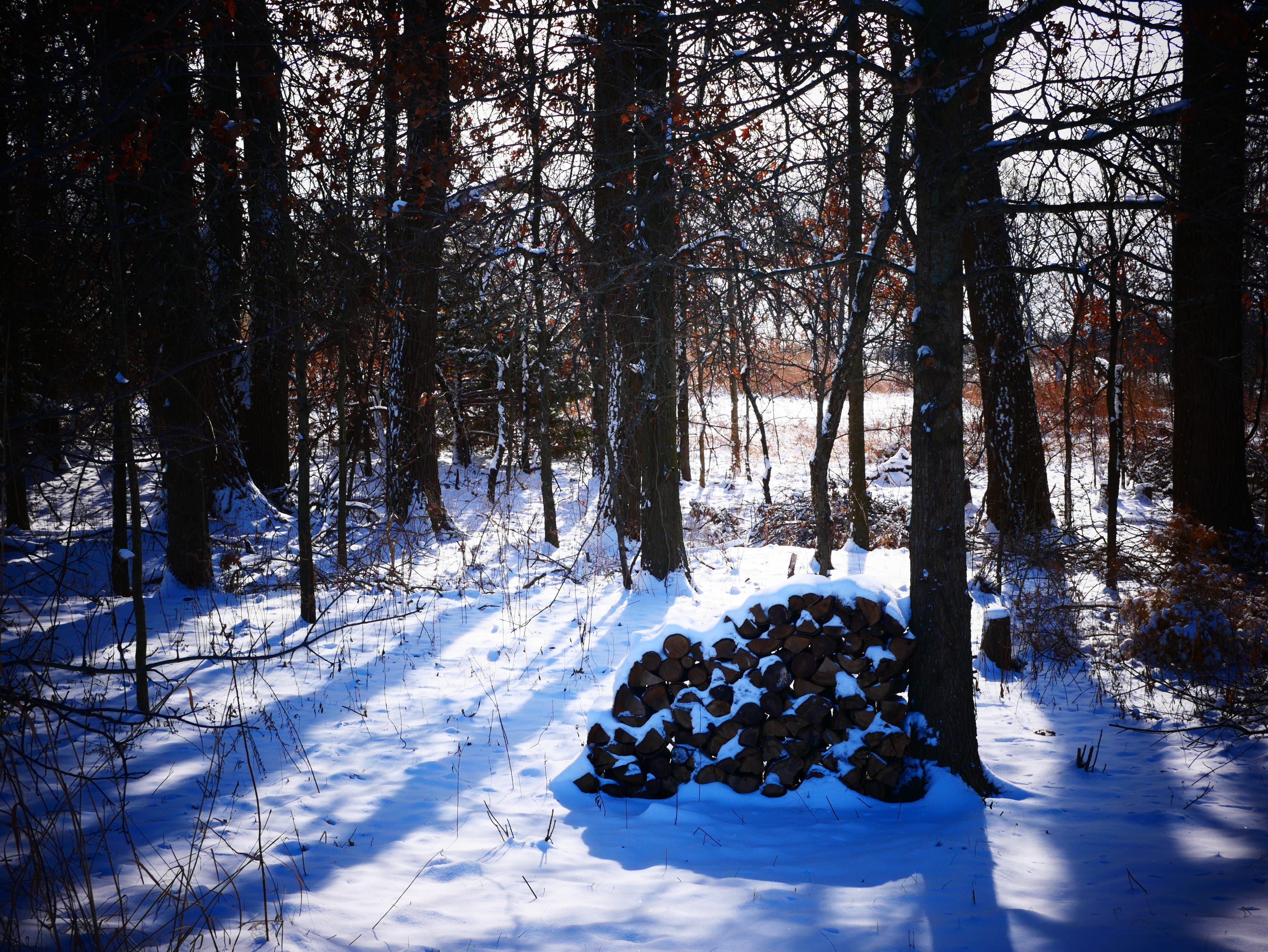
A twig snaps. A dog barks. A chicken cautiously crows a hushed alarm. Two more guardian dogs begin barking, and the harrier careens off to another field to hunt, while the juncos re-emerge from the sanctuary of snow-laden branches. The lives of migrating animals, while existing within a natural order, are perilous but fair. The juncos, unencumbered by fences, walls, or political boundaries, do fine so long as they can find cover and forage. Ocelots, jaguars, and others, not so much. This is the unnatural order of human boundaries projected onto a living landscape—once vast plains shackled in barbed wire, rivers diverted and channelized, prairies and deserts and forests all dissected by asphalt, steel, and uncaring death; the once-fluid spectrum of landmass, water, and life cracked and isolated. And as a species, it seems, we are not content enough to enact this fragmentation against all other species—we do it to ourselves as well.
While I care for the juncos and do what I can to provide for their safety, there is at least some fairness in the cycle of predation in which they flit and forage. In the harrier, there is no malevolence, just a will to survive. The same can’t be said for ICE agents. I can only surmise as to whether or not these men are evil—and watching them gun people down in the street would naturally lead me to that conclusion—but I tend to believe that isn’t my call to make. Their actions, however, are certainly evil. Separating a child from their parents is evil. Putting humans into camps is evil. And while I don’t rightly know if these evil acts are a result of pure and deep hatred or complex manipulation, I can confirm that these men are cowardly and bigoted, displaying an irreconcilable apathy to what it means to be human. They are the largely unemployable set against our hardest-working people, the unjust set against those merely seeking survival. Evil or simply weak, I hope that meaningful reprisal and atonement is in order. In the meantime, the rest of us do what we can, I suppose—create food, create shelter, engage fully with the mutualized project of survival, and, in time, tear down the damned walls.
Xenophobia and “borderism” have existed for at least as long as agriculture has produced wealth. As has labor exploitation. In this country, industrial agriculture has heavily relied on exploited migrant labor since at least World War II, though there are many notable instances from history prior to that time. Previous editions of this Almanac have featured the story of the Wheatland Hop Riot of 1913, which involved farm laborers from all over the world. Mexican and German-Russian families were at the center of exploitative sugar beet production in the West and Midwest. And while the hateful core of these events is often rooted in racism, the “Anti-Okie” laws of the 1930s, like California’s Indigent Act, were born of a general anti-migration, anti-poor sentiment—Los Angeles even had its own municipal border patrol posted at train yards to dissuade hobos seeking work from entering the city, often by violent means (see also: Gavin Newsom).
Of course, while politicians and propagandists alike kindle fear and suspicion of anyone who is poor, foreign, or otherwise unanchored for their own gain in power, the borders they build are never exactly closed. Take, for instance, the Bracero Program, initiated in the summer of 1942 to make up for shortages in agricultural labor on account of the war effort. From 1942 until 1964, 4.6 million manual laborers, or braceros, from Mexico were contracted through the U.S. State Department, Department of Labor, and the INS (one of ICE’s precursor departments) to enter the U.S. for the purpose of filling gaps in farm and railroad labor created by the war. The agreement with Mexico was that braceros would be allowed temporary guest-worker status, though they would be tracked and returned to Mexico after their time was up.
Under the Mexican Farm Labor Agreement, braceros were to be granted adequate living conditions, a minimum wage of 30 cents an hour, protection from being drafted into military service, and required to have 10% of their wages kept in a Mexican bank account for their eventual return home. Braceros were also granted legal protection from discrimination and access to “white-only” spaces—at least on paper.
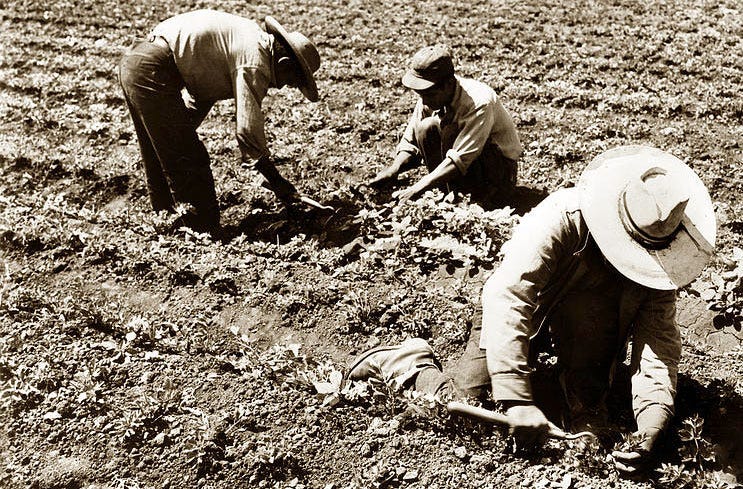
Labor conditions for the braceros were rough. Entrance to the U.S. often began with full-body “sterilization” with DDT, the pesticide responsible for the near-eradication of bald eagles, among other living things. While awaiting work assignments, the men were housed in crowded conditions in “bachelors only” camps that kept them from raising families or otherwise putting down roots. Letters to family and loved ones were censored or destroyed. Mistreatment and even lynchings along the border caused Mexico to place a ban on braceros working in Texas. A common symbol of the program was el cortito, a short-handled hoe commonly issued to braceros for farm labor, which forced the men to stoop tirelessly in the fields. This cruel implement was formally banned in California in 1975, though back-breaking labor in agriculture is still present.
Soon, corruption became an issue for the Bracero Program. The Mexican government selected eligible workers at federal, state, and municipal levels, and this decentralization gave local officials considerable power over the selections, leading to instances of bribery, favoritism, and corruption. Opposition to the ruling political party and disputes with labor unions also had an influence on who had the opportunity to work abroad. Between 1942 and 1947, the program was not working quickly enough to feed labor demands, spurring an increase in undocumented migration encouraged by U.S. companies that saw an opportunity to provide fewer protections than the official program.
In 1951, top-level scapegoating began when President Truman’s Commission on Migratory Labor proclaimed that the presence of Mexican labor economically depressed American farmworkers. Simultaneously, migrant labor programs were still being encouraged by the U.S. State Department as a way to counter the growing popularity of communism in Mexico, among other reasons. As layers of bureaucracy thickened and the market for exploitable, undocumented labor increased, the Immigration and Naturalization Service began “Operation Wetback” in 1954. This operation was a precursor to today’s ICE raids, using paramilitary tactics (Donald Trump alluded to “Operation Wetback” during his 2016 campaign). In the first year alone, over one million laborers were sent back to Mexico; 3.8 million would be deported by the time the operation was finished. Many, if not most, of the braceros never received the promised 10 percent of wages allegedly held back for them in their native state. Adjusted for inflation, it is estimated that a half-billion dollars is still owed to them.
Eventually, the program would officially close, supplanted in part by the H-2A worker visa program and the continued, concealed acceptance of utilizing highly exploitable undocumented migrants. By the 1960s, migrant labor began to organize and strike, led by the likes of Dolores Huerta and Cesar Chavez—all stories worth reading more about. Despite the eventual move toward farmworker unionization, the legacy of the Bracero Program remains—from dangerous and sometimes fatal work occurring under the H-2A program to this most recent flare-up of paramilitary enforcement, similarly intended to not only scapegoat migrants but continue to perpetuate the concealed acceptance of exploitable, undocumented labor.
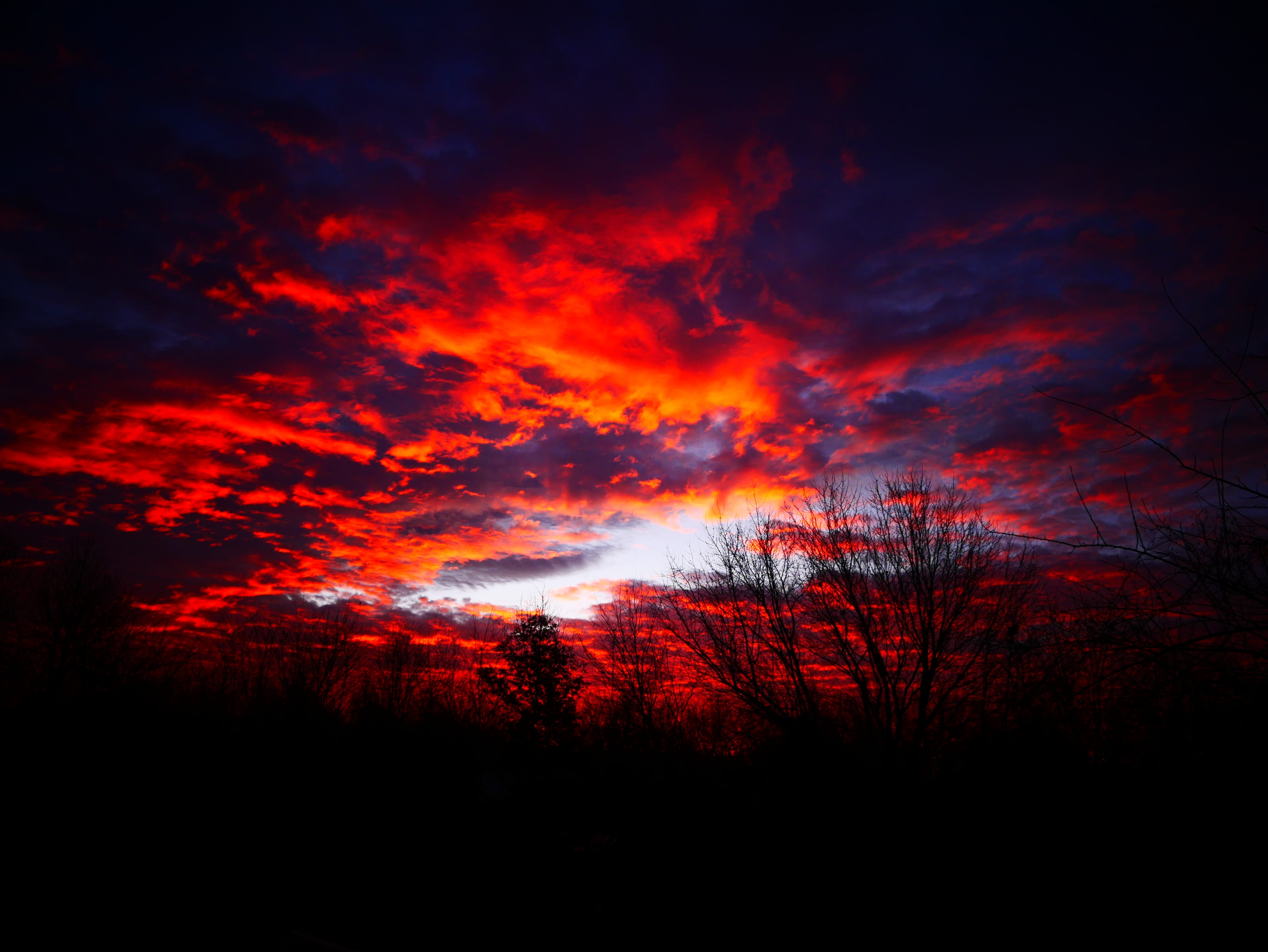
The juncos are still out there in the dimming snow, kicking along the iron earth, harvesting scattered grain and bits of detritus. At the edge of another storm, light squalls of snow—flung into spirals by harsh arctic wind—cascade along the edge of the draw, burying the dropped and forgotten prairie seed. It piles in small drifts, gradually climbing over the sagging barbed wire of fallen fences. The milkweed pods, gray and emptied of germ, quiver. But someday, dormancy will break, and I wonder just how hot this summer might get.
In the larger scheme of things, I don’t know where home really is for the juncos, or for myself, for that matter. I suppose, regardless of fences and hawks and cold and ice and iron ground, home is just the place we need to be to survive. I watch the juncos flit up into the embrace of eastern red cedar, fluffed and huddled. Surviving. As inhospitable as it feels here this week, it’s probably more pleasant than a Canadian January—at least for a bird.
My house is pretty cold, and the work here is often very hard, but I have a lot of advantages being here. I’m not in any danger. I have lots of good places to hide if I were, and the architecture of surveillance barely appears here in my part of the world. As wild growth reclaims the edges of old fencelines, those old fragments of field seem to dissolve into the woods, and there’s plenty of food and shelter for more than just myself. I can’t be in the streets to sound the alarm and maintain watch over a world gone increasingly amoral and hateful—we don’t even really have streets here. But I’d like to think that, milkweed and all, we’ve begun to build some sort of safe harbor for mutualized survival and the continuation of some larger project: to meet the needs of a natural, borderless world with us in it. And in the morning, the juncos will be back at it again, re-emerging from the branches for a time determined only by the seasons.
The Fox Holler Almanac is a reader-supported publication— I couldn’t do it without you! Share or leave a comment if you liked it. Hell, leave a comment if you didn’t, though I might ignore it. And if you feel moved and able to materially support my work, upgrade your subscription or buy me a coffee.
Thanks, y’all
Man, this reflection is what’s going to get me through today. Thank you
🙏 lovely reflection. Thank you for connecting all these dots.