
Killing Animals
Staying human in the age of industrial slaughter

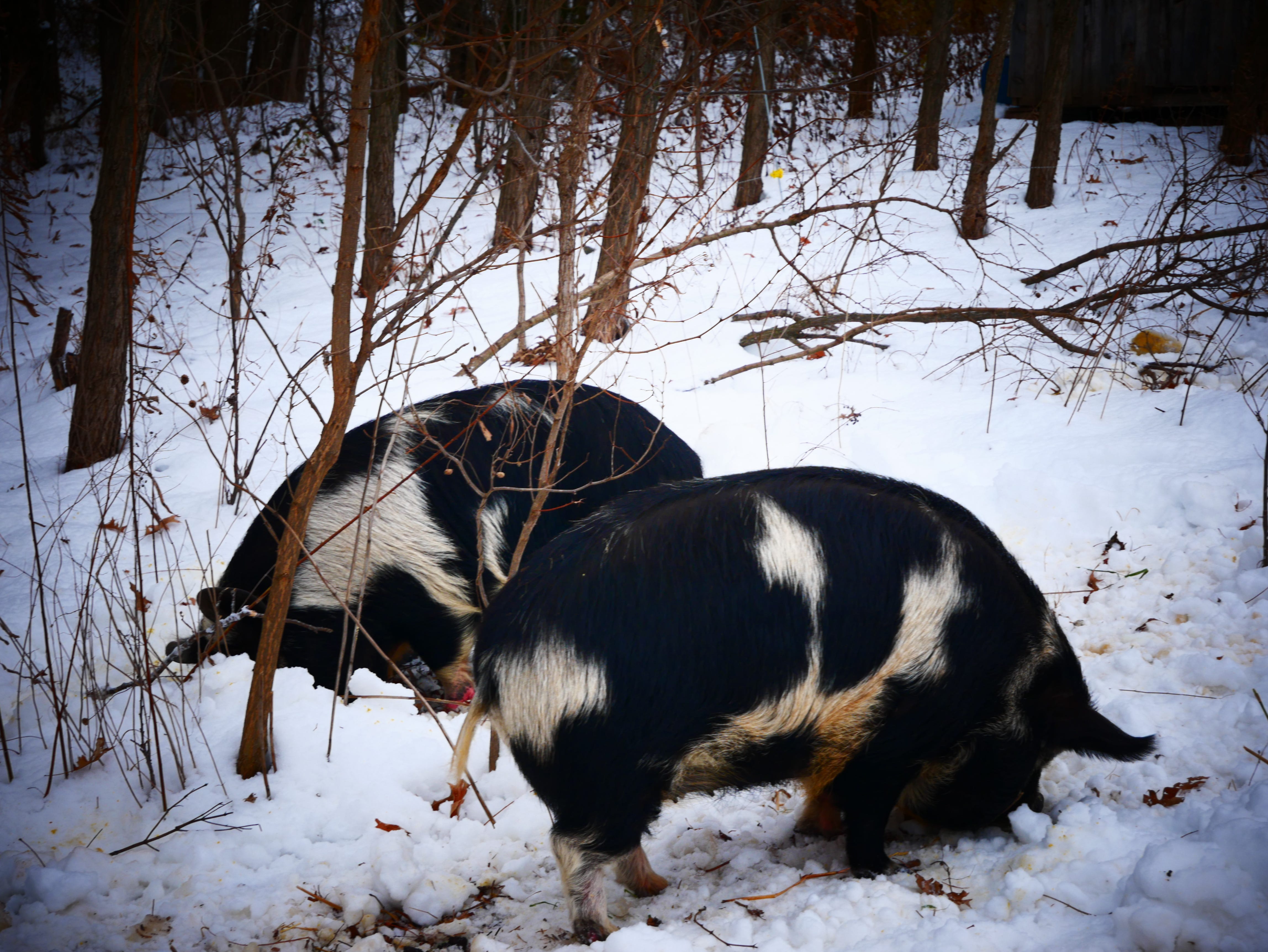
In recent days, I have brought many animals to slaughter, with more slated for harvest throughout winter. Today, a cold rain is falling on the bloody slush where I wiped my knife between throats. Sparrows are hopping and kicking in the mud underneath wet and windblown tussocks of goldenrod and aster, nibbling at fallen seed near the gory brambles and blood-flecked thatch. The rain brings a sharp whiff of earth, copper, and decomposition, a depression in the nearby dormant grasses washed with diluted red puddles.
In my best moments performing this work, I am just another animal, killing animals. I do not hesitate. Without malice, I shoot them quickly and accurately. I test their reflexes, to be sure they are insensible, unable to feel pain. I stick my knife in the soft cleft of their throats to end it quick, forcing blood from the cut in small bursts as I pump their legs to empty their veins. I do my best to be quick, painless, and un-traumatic in my approach. As their life fades, they depart with no loss of trust for me.
In past editions of this Almanac, I’ve usually erred on the side of caution when detailing slaughter. Hopefully the title of this piece is enough of a trigger warning. In the process of raising and killing animals over the past 13 years, I’ve accumulated a long list of apologies to make, but few of them are to other humans, at least on account of my lived experience. I don’t seek forgiveness, or even understanding from anyone with different values on animal agriculture anymore. Understanding comes at a cost few pay in the age of industrial slaughter.
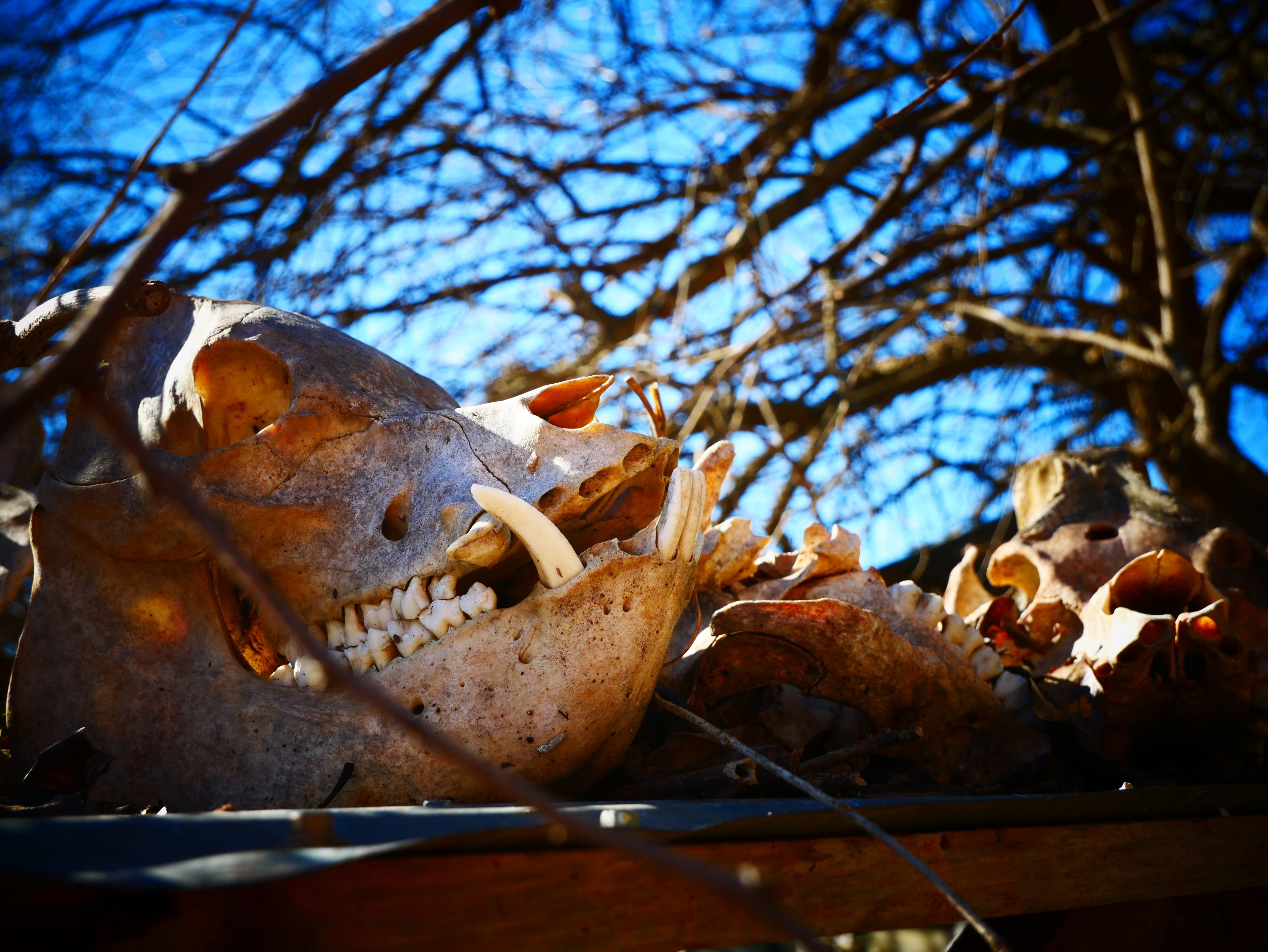
I kill animals, sometimes like a higher predator, but often like a mere human. I have killed hundreds on this farm, and among the things I’ve learned is that I don’t trust anyone who speaks callously about harvest and consumption. Paleo-podcaster-meatheads and their ilk do not impress me. In the process of killing an animal, there are moments of sadness, regret, disgust, and eventually hunger, appreciation, and even humor. But I’ve found that those who are most vociferous in their lust for meat never seem to really have what it takes to midwife death to living things with the requisite care and personal fortitude. Killing animals doesn’t make you a man, but with enough clarity and care, it might make you a human being.
Last week it was Smiley, a particularly sweet pig with an exaggerated face, all tongue with a compact rooter. Smiley was beginning to suffer from a jawbone fistula, a somewhat common issue in her breed, in which a hole forms in her facial bones. This hole can become compacted with food and lead to infection, pain, and gradual loss of condition and death. Smiley was always the first pig to greet me at feeding time. From a technical end, killing her was easy.
Scalding Smiley’s carcass in a hot bathtub to loosen her hair and create as much food value as possible with her body, I probed the deep hole running from beneath her eye down into the roof of her mouth, loosening wads of rotting grass, leaves, and acorns. This may have nominally been a mercy kill, but the others can’t be justified like this. At the end of these days, I sometimes see the meaning in it. But sometimes I don’t.
When the gunsmoke clears and the patches of spilled blood cease their steaming, we lay our hands on the body and clean it, like one might do for a wake. Bloodless, with her eyes shut tight and her arteries evacuated of blood, my relationship with Smiley becomes even more intimate. I clean the mud and grass from her hooves, scrape off the bristles, moving my hands across the warm shape of her back. I work to unclamp her jaw, and push her tongue back into her head before rigor mortis sets in… this will allow me to harvest it cleanly the next day. There is little more than half a bucket of viscera I cannot use, and this too is cycled through living beasts until returned to earth.
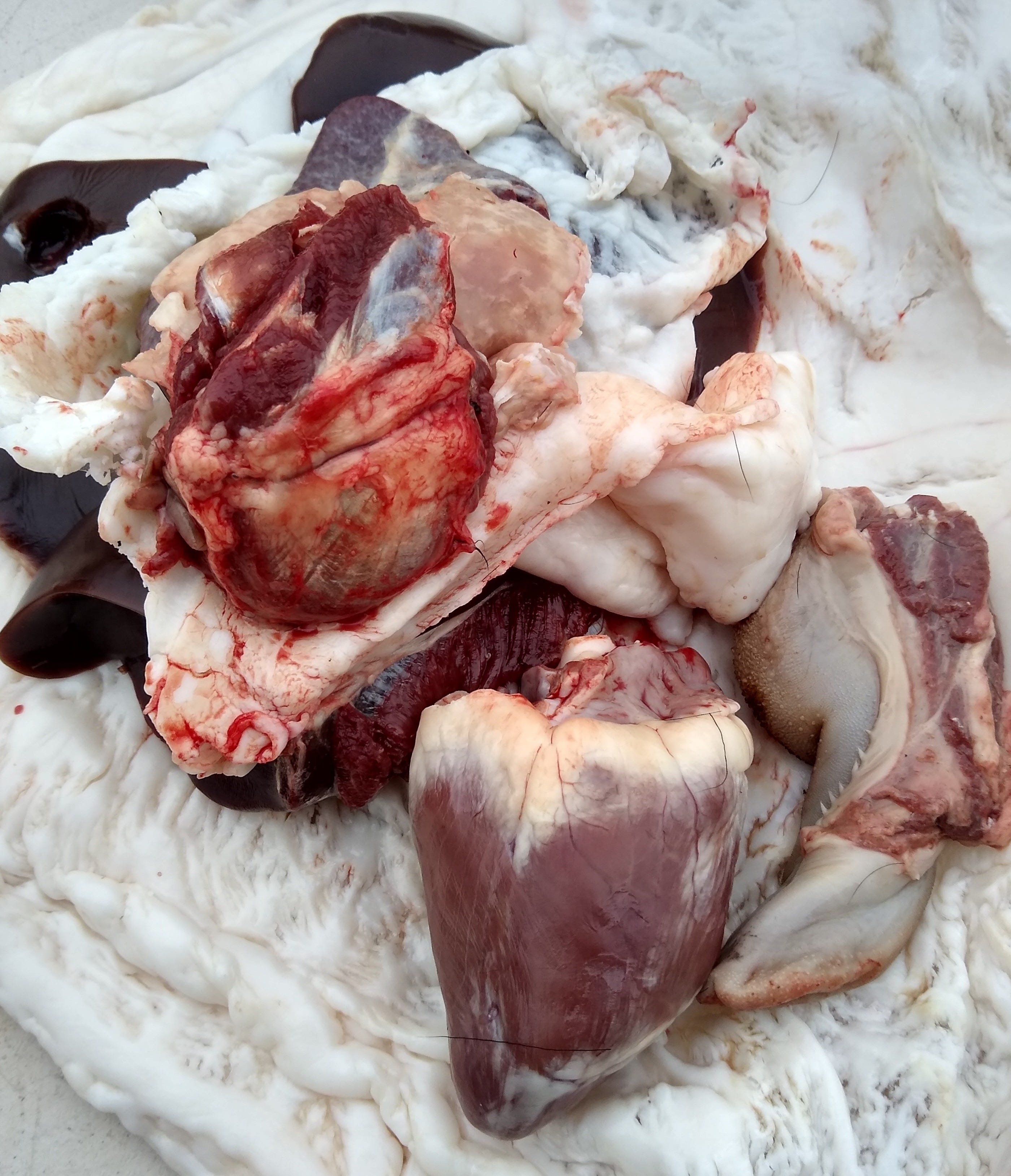
I don’t exactly relish the process, but I feel good when the kill is clean and painless and nothing is wasted. There is little time during the work to feel grief– that comes later. Even after a hog has been killed, the risk of injury continues. There’s hot scalding water, heavy carcasses, steel cables under immense tension, sharp knives and slippery surfaces. A skilled butcher has more than deft hands. The work requires a deep awareness of my surroundings, and a flexible, sober brain. While I approach the first steps of swine harvest somberly and with a depth of gratitude, and then follow with reflex-like predation and careful consideration of all safety factors, the transition to evisceration requires a bit of wonder, if not humor, to get through what is the most objectively gross part of the work.
There’s probably no dignified way to say it: carefully avoiding any post-mortem excretion requires a lot of physical attention to the anus. Humor is a way to regulate the attendant anxiety of the situation. As it is said, you can’t spell slaughter without laughter. Then comes the wonder, when I marvel at the way these beasts are put together. Pressing my fingers between connective tissue, removing the hot livers and delicate webbing of the caul membrane, visualizing the metabolic process which made this vital energy from grass and tree seed, the gratitude all rushes back. I wouldn’t do the work if I didn’t believe it was of value to something larger than myself.
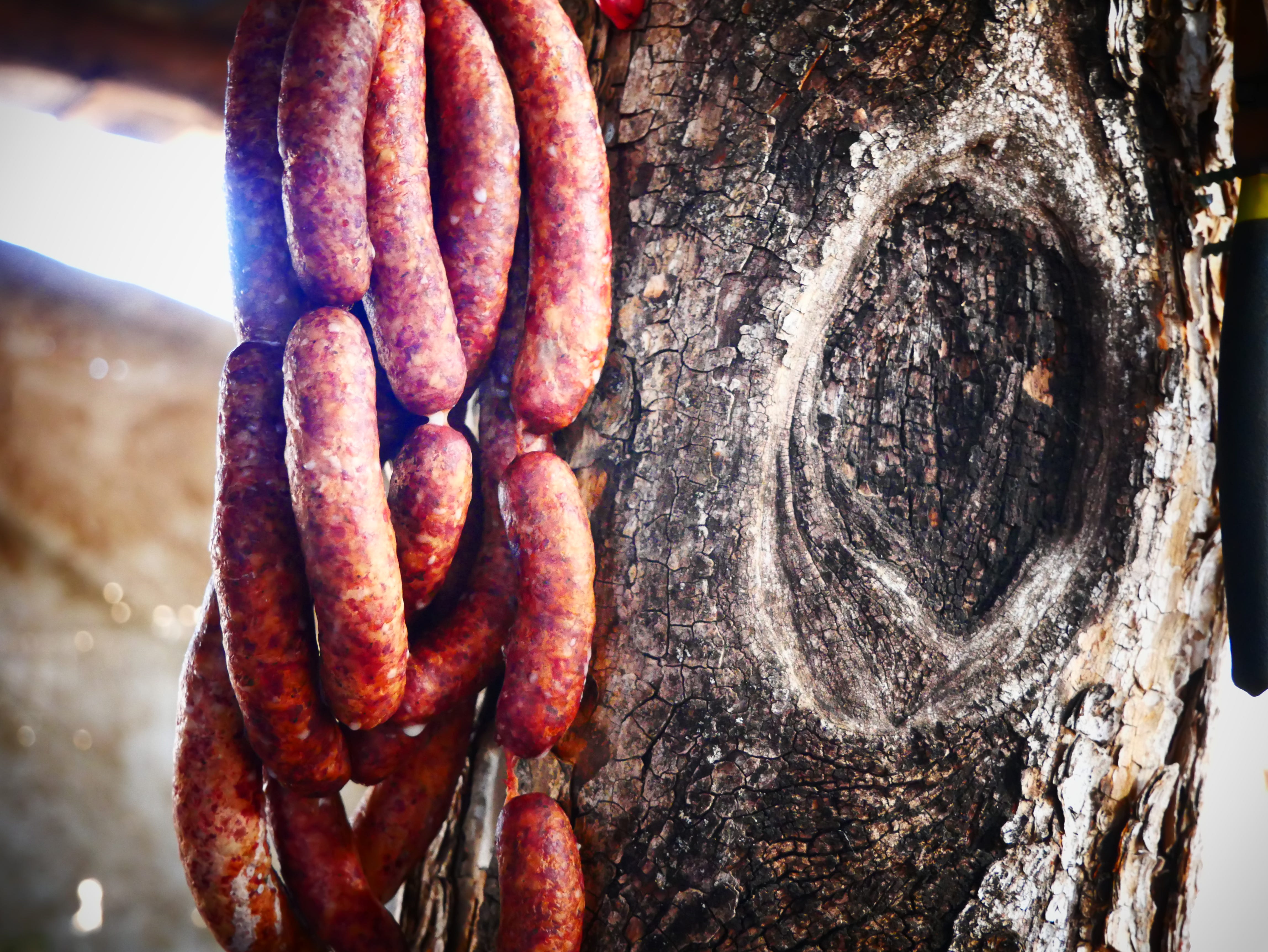
Our global level of meat eating is entirely out of balance, along with many other facets of human extraction and consumption. The degree of environmental harm caused by animal agriculture is unjustifiable at our current scale. But neither can I advocate for a global vegan approach to human nutrition, insofar as it will never happen. People in the affluent world should absolutely derive more of their protein from plant sources like legumes and tree nuts. However, as a species, we act against our own self-interest almost pathologically as it is– let alone the needs of our biosphere.
With the increased popularization of “regenerative” agriculture, people are beginning to ask if animal products can have a positive impact on the environment. This is a vital area to focus scientific research, and unfortunately, the nature of scientific research makes it challenging to integrate any set of findings into a larger, holistic understanding of our planet at this stage of peril. Perhaps the question isn’t whether or not animal products can have a positive impact on our environmental systems –nature has demonstrated that animals within the natural ecological cycle of predation absolutely do, and death is the great engine of biotic energy on the landscape. Perhaps the question of regenerative agriculture is how the animal piece necessarily fits within the larger need for nutrient cycling for the less-resource intensive crops humanity will need to transition to.
I was vegan for environmental reasons for around half-a-decade, and I wasn’t easy-going about it. I suppose my reevaluation of animal agriculture came when I began to learn everything I could about organic food production. While I’m sure that a sustainable, veganic system of food production is possible in certain climates, the fact is that most plant-based foods available to consumers are only available on account of the heavy use of synthetic, fossil-fuel derived fertilizers, and other agricultural chemicals. A “bloodless” agriculture is just as effective as anything in killing the soil, when practiced without care or focus. To be clear, this is also true of most grain-fed meat, milk, and eggs. I began to understand that food might be considered the by-product of animal stewardship, not the goal itself. The goal of animal agriculture, in an integrated, functional, long-term food system should be to cycle nutrients and maintain calories “on the hoof” as solar storage.
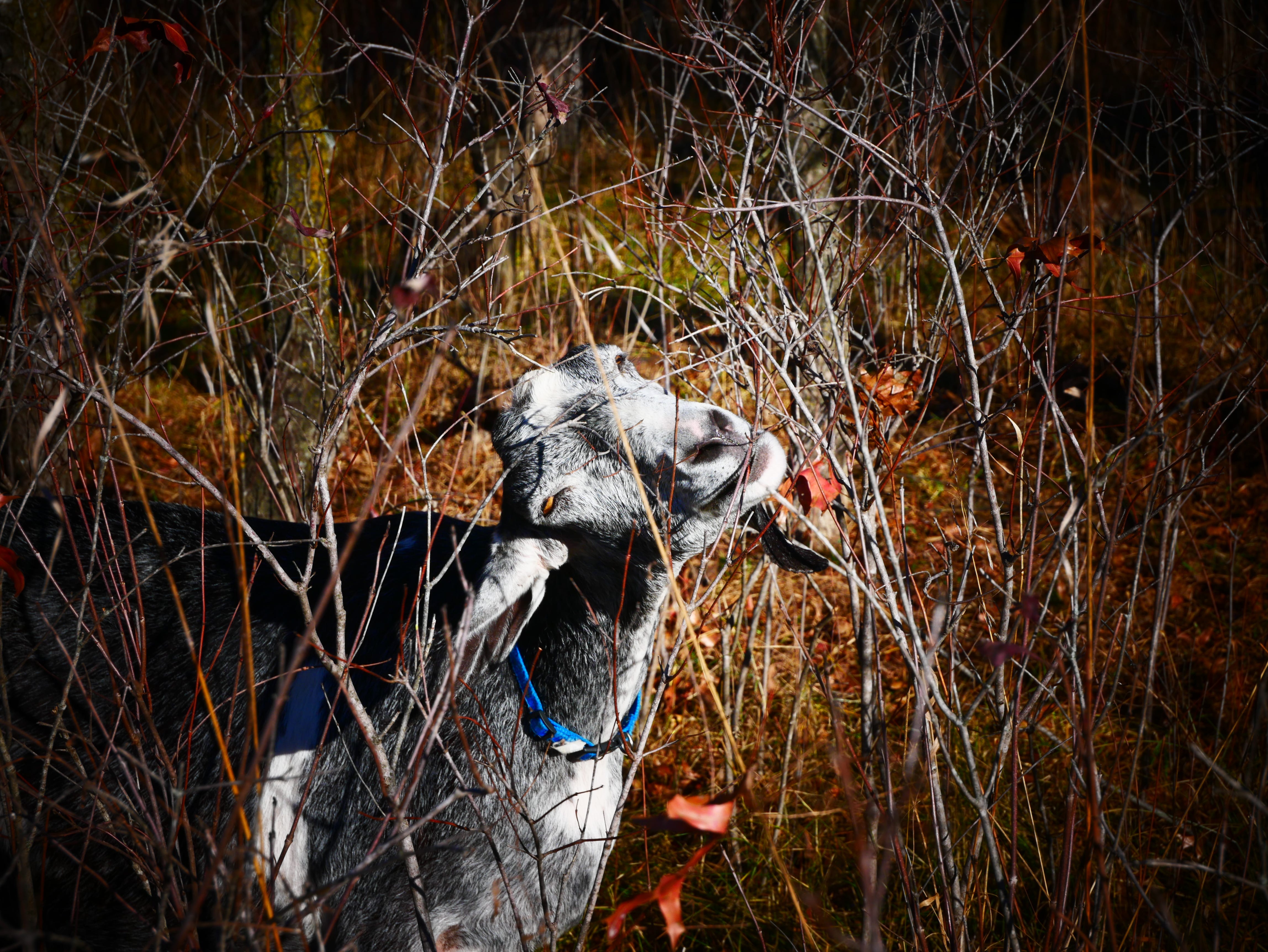
In terms of death, there is death in all farming. If the concern with death is spiritual, and all souls are to be weighed equally, the habitat loss from plant-crops certainly exceeds that of pasture-based systems. If the concern is ethical, I agree, to a point. I can kill an animal without pain or emotional distress, but I cannot do it with consent. You’ve got me on this one. If all farms needed to pass a purity test, our species would starve. There are some days in which this is perhaps “up in the air” for me, but on the whole, I firmly believe in the reduction of human suffering.
It is hard to look at this world and not want radical change. Perhaps, as I enter my creakier years, I’m undergoing a softening of sorts, but I think I’m firmly in favor of a thoughtful, coordinated shift towards functional, sustainable systems. It might make me a damned optimist, but it beats the alternative. Appropriately raising animals —and killing them— at a measured scale, feels possible to me. If the bottom dropped out of the grain industry tomorrow, it would happen fast, too.

The rain has washed the blood and slush deep into the pores of this clay-stricken slope of Northeast Missouri sidehill. Where wolves once roamed before colonization and extirpation, my dogs now stand and tear at the last bits of bone and waste. Where bison ranged, our cows loaf, building flesh and hide and milk from grass, and through fermentation and alchemy, feeding hungry soil with their dung. Curious hens peck and range across the thatch, and the remaining hogs snuffle down in the icy draws for acorns– the same draws I am managing for their retirement.
I’m human. Killing animals takes its toll. This will be the last year I raise pigs for meat, for a while, at least, though I’m holding onto a small group of my favorites, just to keep the cycle moving. I have done the work for a decade, and we all need to rest– myself and my pigs. If we want to create regenerative food systems that include livestock, there’s a lot of things we need to sort out beyond stocking rates, grazing duration, and forage per acre. A part of it is a matter of our consumption patterns, but there are also matters of the heart. To raise meat sustainably will always put somebody’s heart on the line, and it seems to me that the more sustainable a livestock operation is, the closer the heart of the farmer and the heart of the beast are intertwined. Even with a quick, clean kill, this work will always inflict pain somewhere.
While the instinct needed for killing animals is rooted deep across many cultures, the global industrialization of food has rendered many of us unalert and unfocused, closer to scavengers than hunters. The question might be, if we are no longer killing animals, what is our right to eat them?
Chances are pretty high I’m going to lose a few subscribers today, so your support is extra appreciated!
The Fox Holler Almanac is a reader-supported publication— I couldn’t do it without you! Share or leave a comment if you liked it. Hell, leave a comment if you didn’t, though I might ignore it. And if you feel moved and able to materially support my work, upgrade your subscription or buy me a coffee.
Thanks, y’all.
THANK YOU for the absolute transparency and reality of slaughter. at farm school the only thing i could not face was killing and processing chickens. my entire class,no problem. i watched my grandfather do it without any drama on his part then i sat that evening avoiding the flesh on the table. i’ve been in sicily where goats and boar stripped of their skin hung like dresses outside the butchers shop. i applauded the shopkeepers for the confrontation. it is The Truth of Life this relationship but everywhere we turn we are greeted with cartoon talking images of the animals we eat live with and all the other not so good things we do. so. yeah. i love your writing for reasons i can never express. i read everything because i know or at least have a glimpse at the rest of your life and feel the depth and hard work of your existence.
appreciating you from a food desert.
Thank you, Benjamin. Sincerely, thank you.
I raised rabbits when I lived in Vermont. I did it to face killing: the emotions, the mechanics, the ins and outs of freezer camp. Now I kill birds and animals in the wilds. I do all my own processing. And I consume far less meat than I once did because of have come to understand, I think, interdependence and reciprocity. And with a few exceptions, if I eat meat, I killed it, dressed it, processed it and cooked it.