
The Great Replanting III: Creating Chaos
Planetary boundaries, hackberry maps and sexy riparian buffers

This is a continuation of a series I began last year on what it might really mean to implement a significant tree-based agriculture, so please check out earlier pieces (search “Great Replanting” on my main page) in the series for context, in addition to my last piece on waterway disturbance and straight lines.
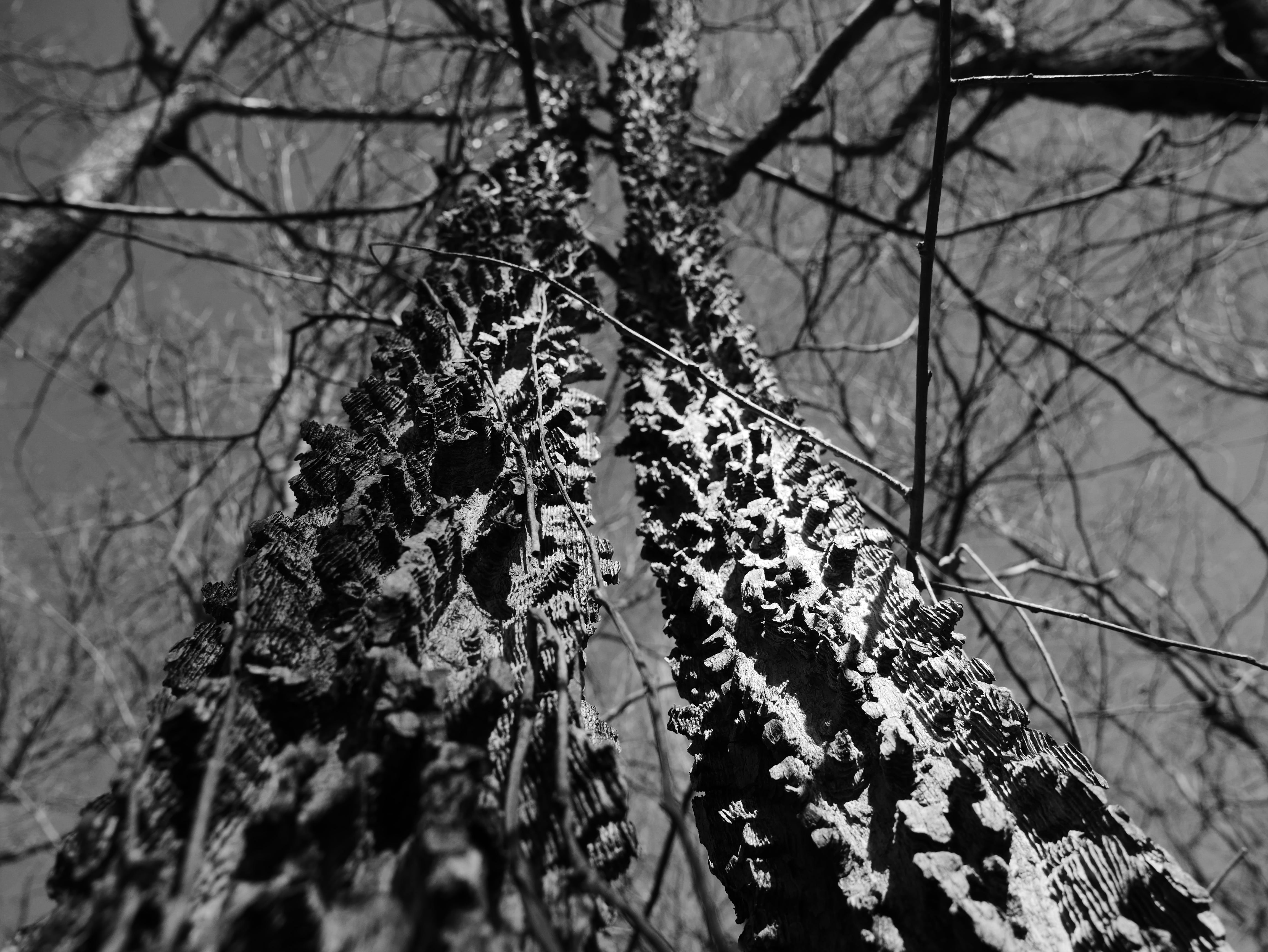
Those first bouts of harsh wind and cold spring rain have cleared us, leaving only the slow drip of water across furrowed bark, the plaintive peents of timberdoodles, and the faintest early sonatas of chorus frogs croaking from the muddy, swollen form of the Long Branch creek. Someone with their shit together would be planting trees now, but I don’t have my shit together. The winter here in Northeast Missouri has been dry, and while I’m plenty familiar with March rain and its accompanying mud, I feel unaccustomed to it on account of the extended absence of moisture.
Down in the bottomlands, where the vessels of this continent’s circulatory system gurgle and boil with muddy water lapping at time-worn logs and debris, the deeply crenulated form of Common Hackberry (Celtis occidentalis) stands stark, rising through the chaos of decayed root-mass, overturned hulks of dead elm, and creeping carpets of moss and chickweed.
I’ve been told that the hackberries produce a fruit, one which I have never found or eaten. Maybe the pollination conditions are too finicky, or maybe the trees are younger than they appear. Folks say that hackberry fruits are dry, yet sweet, like a date. Perhaps I’ll never know, but I don’t seek rent from trees– they’re welcome to just stand there and host hackberry psyllids and tawny emperors. The lumber of hackberry is not particularly valuable to human industry either– rough, soft and prone to rot, it provides a more immediate benefit to forest-floor microbiota and enterprising woodpeckers than human carpenters or furniture-makers.
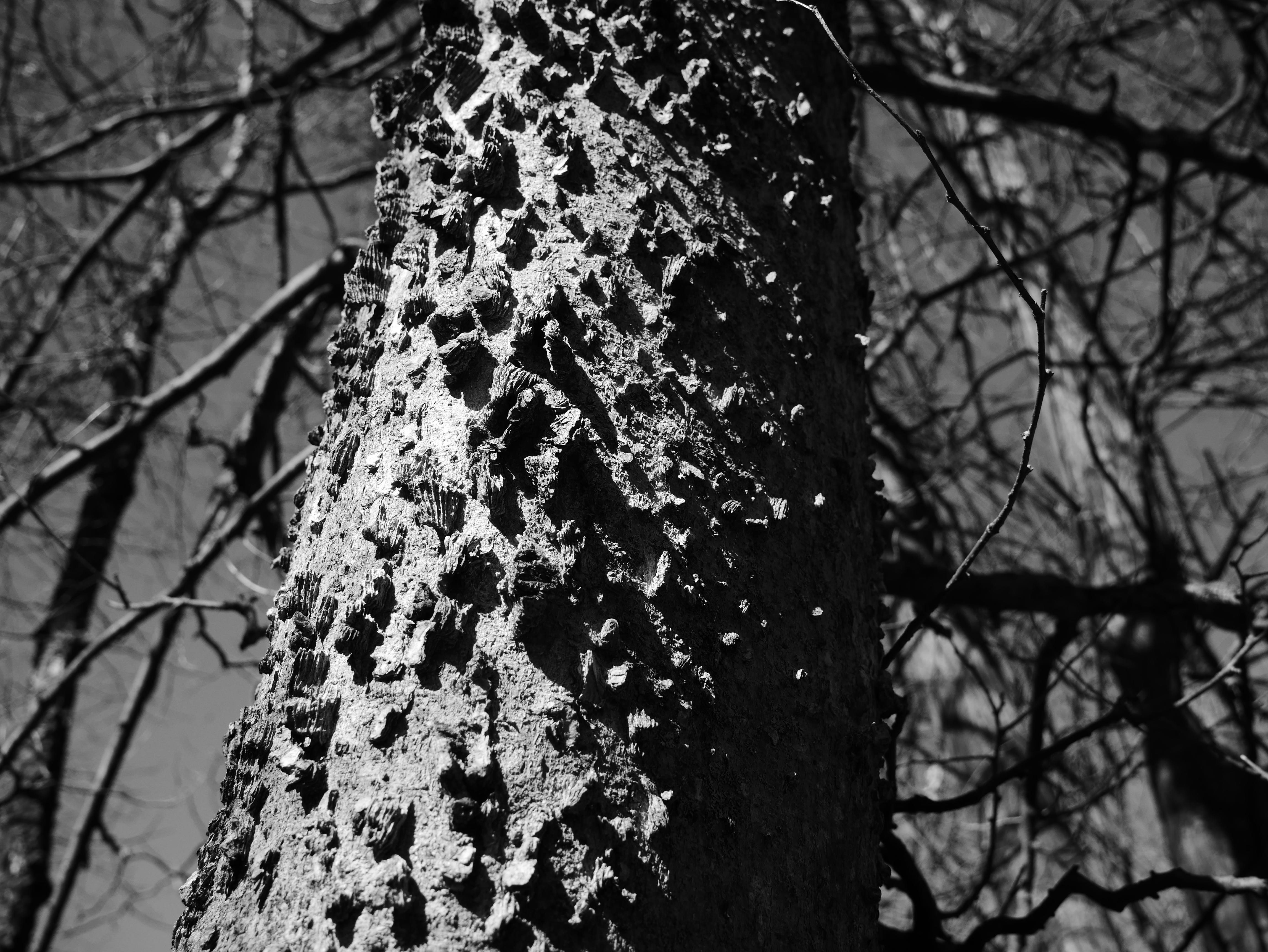
No, the human value of hackberry might well be a natural example of functional aesthetics. The bark is incredibly furrowed, mottled with plateaus and ridges, laid out like a topographic map, a playground of shadow and light. Among the stands of creaking hedge and pin oak, it offers some degree of inspiration, at least to my own mind’s eye. The warty, corky ridges of hackberry provide, if nothing else, a layout for what a Midwestern landscape that intercepts and slows water and erosion and promotes biodiversity might look like; dynamic, non-linear, and seemingly random.
Tomorrow I’ll be just up-slope of some of these hackberry trees, laying out lines, marked with little plastic flags in anticipation of a new round of spring tree planting– nice neat rows spread 120 feet part, punctuated by willows, persimmons, honey locusts, big-tooth aspens, bur oaks, white oaks, pecans, and shell-bark hickories every thirty feet or so. We’re receiving grant money for the project, which is for silvopasture –the intentional integration of trees into livestock pasture– and the amount of money we receive is correlated to the total “stem-count” for the USDA-mapped fields. In designing this project, we had to balance the requirements of the grant with the utility of the space, with my own desire to integrate tree species that enhanced and improved ecological functions of the site.
Even the best-intentioned, incentivized tree-planting programs inevitably turn towards grid-based designs. A grid of trees is (sometimes) easier to mark out and plant. A grid of trees is certainly more efficient to maintain and harvest. And while it is perhaps a subconscious choice, grids of trees appeal to human aesthetic concerns, particularly in mainstream agriculture. In fact, I regularly go out to our (mostly) square and precise chestnut planting to admire the uniformity of the rows, each unique seedling obscured by tall plastic tubes, if only for the dopamine hit of satisfaction that comes with allowing my eyes to flow across the linear space.
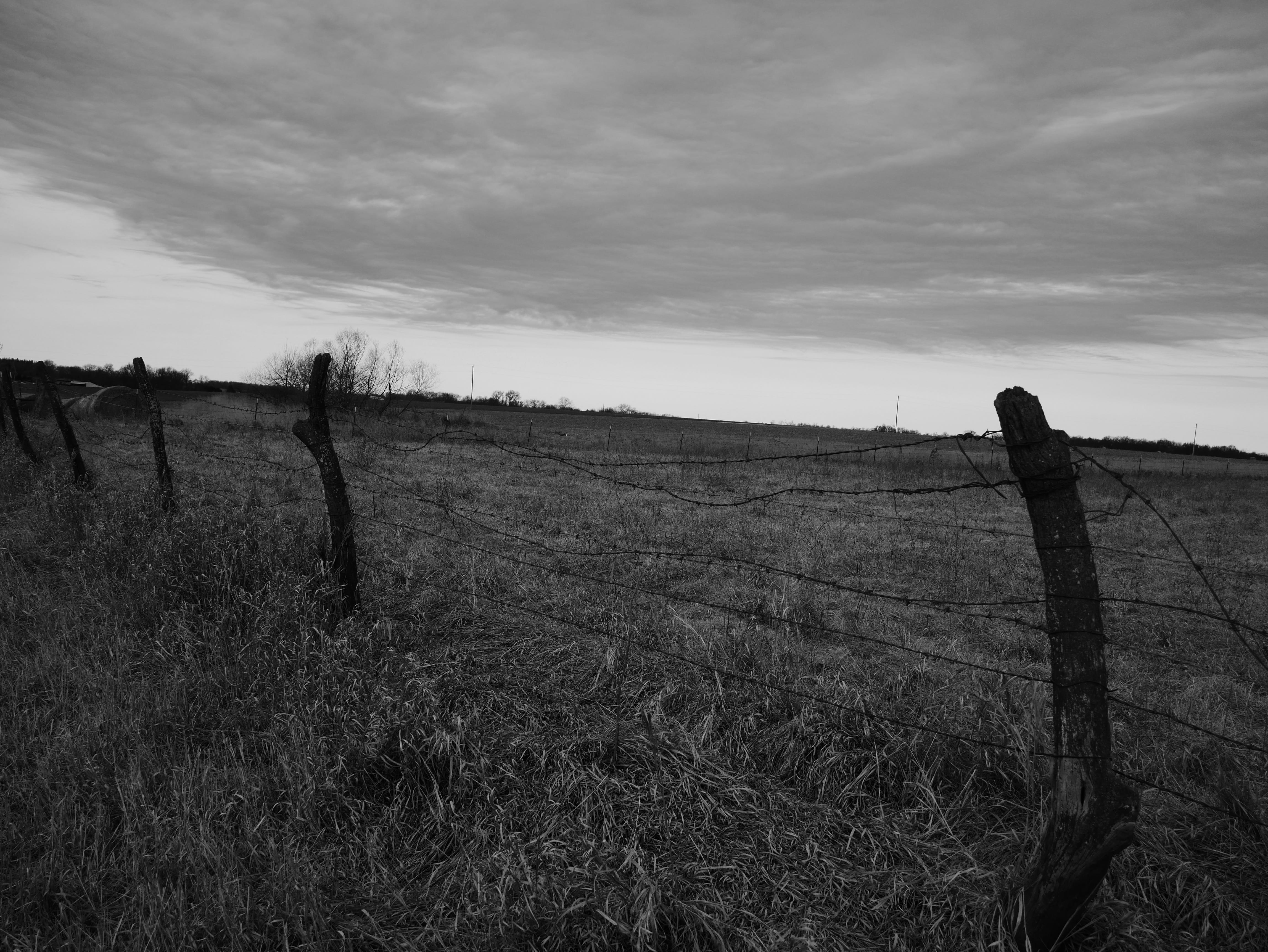
And look folks, if arranging trees in straight lines helps get more trees into the landscape where they’re needed, I suppose that’s fine. In an agricultural economy riding across the thinnest of margins, efficiency is a factor worth considering. As humans, we are perhaps on the brink of finally looking towards trees as providers of nourishment rather than obstacles, which counts for something. But still, I do not know that our attempts to standardize tree crop production by removing the very dynamic nature of woodland landscapes will offer the full-range of benefits that trees provide to the world outside our narrow, human needs.
One of the things the agroforestry movement is doing well here in the (currently) affluent Western world is perhaps strategic compromise. In order to turn the tide on the ongoing and impending environmental collapse as it relates to agriculture, some degree of “palatability” is probably necessary. In a country where political and economic power has long been built on land-grabs and territorial ownership, we probably need to adjust our practices to appeal to the landowner class and the assisting bureaucracies that require a simplified efficiency to effectively operate.
But that isn’t how a forest or savanna operates. There are unseen complexities in soil and landforms that we will probably never fully comprehend; interactions we can scarcely observe, a great push and pull between disturbance and regeneration that meanders through the living mosaic of soils, space, and time. A land-use pattern like agroforestry, if it fails to address the need for what we call “chaos”, is ultimately incomplete.
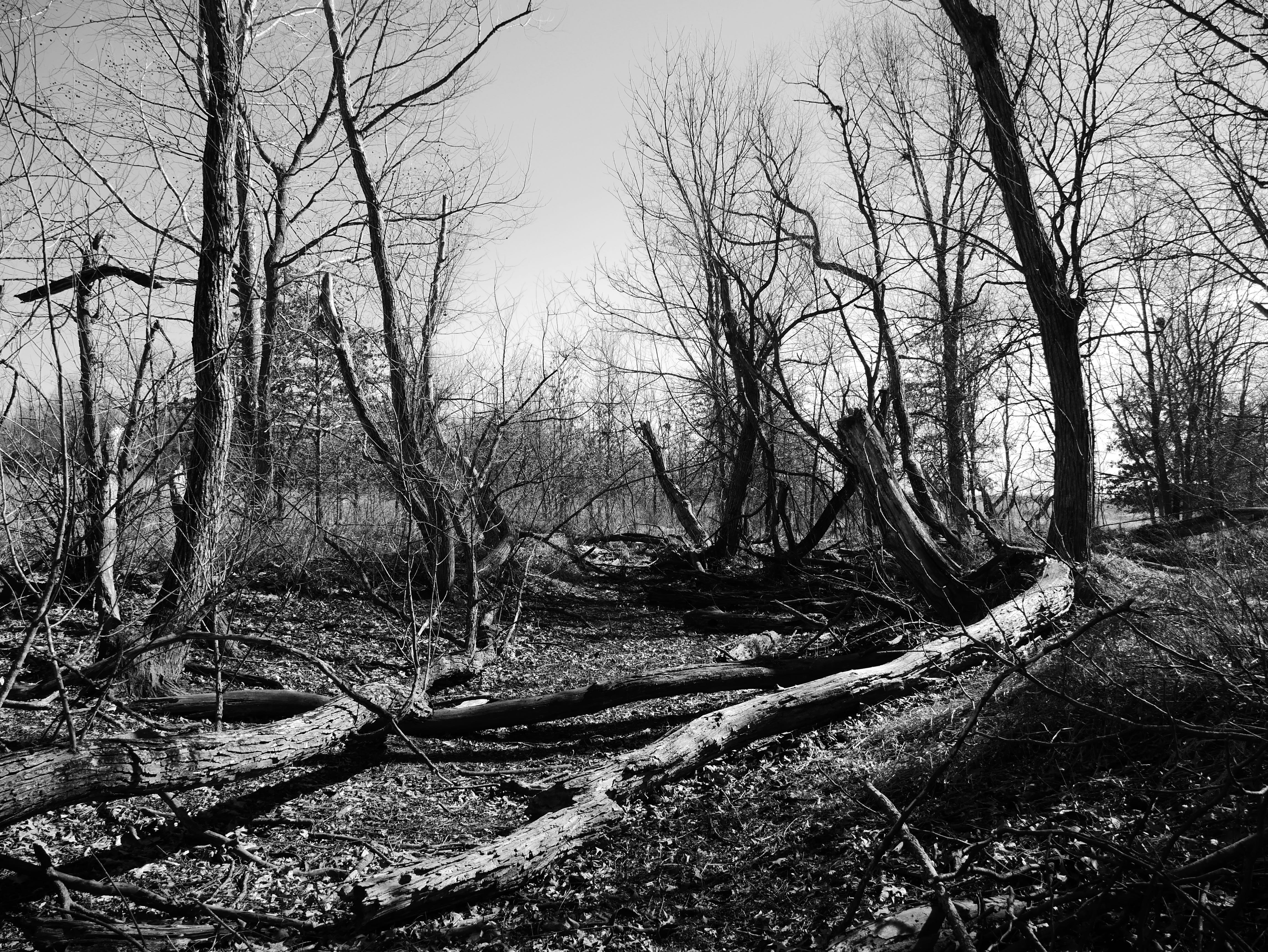
When I began farming trees and learning about agroforestry practices, the “riparian buffer” concept was maybe the least sexy practice to me. Planting organized rows of high-yielding, food-bearing tree crops certainly spoke to that prideful part of me that wants to be a provider, in addition to that painfully human desire for control and understanding which can become pronounced after years of farming. The deep, intentional interplay of silvopasture, alley cropping, and multi-story forest gardens held an appeal in the parts of my brain and heart that desire deeply-considered, almost byzantine models –that is to say– made me feel like a smart cookie. Riparian buffers felt like an afterthought; plant a bunch of stuff down by the creek, sure. But in my own process of erosion, I’ve found myself, much like the ever-crumbling prairie earth, gradually flowing down to the bottomlands, where chaos thrives.
If we are to regenerate a planet that remains viable for biotic life, caring for our watersheds has a lot of leverage. Lately, I’ve been considering the 9 Planetary Boundaries framework, developed by the Stockholm Resilience Centre. The concept is fairly straightforward; Earth has certain physical limitations, which if overstepped, will leave our planet uninhabitable. Researchers at Stockholm University are focusing on nine of them: climate change, novel entities (toxins), ozone depletion, aerosol loading (air pollution), ocean acidification, modification of biogeochemical flows (nitrogen and phosphorous in waterways), fresh water change, land system change (habitat loss), and biosphere integrity (mass extinction). As a global culture, we’ve overstepped seven out of nine of these boundaries. Agroforestry practices address most of these issues to a degree, but I would argue that riparian buffers directly improve conditions in terms of biogeochemical flows, habitat loss, climate change, and freshwater change, at a very reasonable cost of implementation.
If the cost of inputs like fertilizer and fuel continue to rise and the price of row-crops continues to drop, planting the trees near creeks and rivers here in the Midwest to trees might become increasingly agreeable to farmers– with or without the overhanging doom of the 9 Planetary Boundaries. In a place like here, Northeast Missouri, where conversion from corn and soy to chestnuts and hazelnuts is a hard sell, extra hunting ground and improved stream fishing carries a bit more weight, particularly on marginal ground that is increasingly inefficient to farm on due to flooding and the high-cost of agriculture.
Riparian corridors also do the heavy lifting in terms of keeping waterways clean and offering habitat to a diversity of wildlife. While different arrangements of trees, shrubs and grasses will achieve varying levels of efficacy, implementing rudimentary buffers doesn’t require the high degree of expertise or initial cost of more production-oriented agroforestry practices. That said, according to an EPA review of research, well-designed riparian buffers are capable of reducing 90% of phosphorous pollution, 100% of nitrogen pollution, and 90% of sediment pollution. While the savvy steward can include tree species that might provide some future income, a diverse mix of cheap conservation department nursery stock will suffice. The reason for this high rate of efficacy? Chaos.
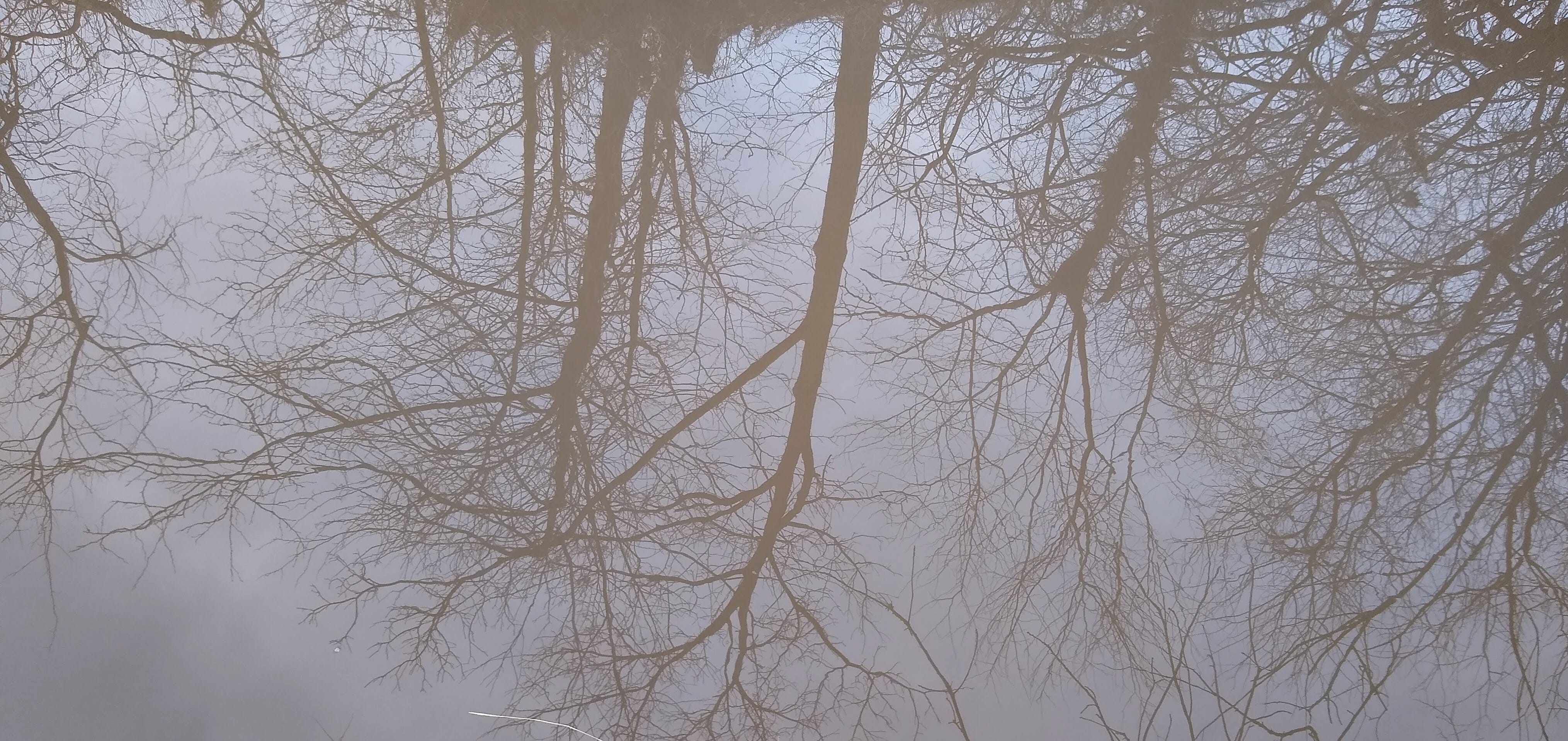
Back down in the hackberry, beyond the view of linear rows of flags and plastic tubes, I cannot walk a straight line between one tree and the next. I must scramble across the overturned root-balls and rotting hulks of dead giants, tramp down through muddy, deer-tracked pools, and around thickets of prickly ash. The fibrous base of hackberry, deep-running taproots of oak, sprawling below-ground branches of Osage orange twist and coil into different depths of soil strata, feeding exudates to distinct communities of microbes. With each new species of tree I stumble across, new sources of life for a diversity of insects announce themselves. In the chaos and clamor of creaking branches striking each other in the wind, new opportunities open for red-shouldered hawks, flying squirrels, Indiana bats, and wood peewees. I suddenly see what I failed to recognize before– riparian buffers are sexy.
There is no question that a tree planting will help to provide wildlife habitat, ameliorate soil erosion, absorb excess nutrients, and help to protect waterways. But if every tree is the same species, rooting down to the same point in the soil profile, hosting the same soil life and the same wildlife, then it isn’t necessarily matched to the complexity of our current environmental predicament. The full mechanics of impeding waterway pollution, microbially neutralizing it, and cycling atmospheric carbon into soil carbon with the aid of wildlife are not perfectly knowable; they’re simply too complex to fully understand, let alone efficiently monetize as a sustainable agriculture practice. In spite of, or perhaps because of the mystery of how riparian communities are organized, humans do find value in them outside of transactional relationships. And perhaps that’s the distinct advantage these buffers have over other agroforestry practices– they function on a scale and level outside of our attempts at organization and understanding, but tap into a sense of awe that is deeply human.
I want to recognize that land access is a huge privilege that many of my readers do not have. While I hope to examine how land trust models function in granting that access in future chapters of this Almanac, one pathway towards stewardship I’d like to offer is joining (or organizing) your local Stream Team. Here in Missouri at least, there is support for training citizens in water quality monitoring and watershed improvement projects, and you can even get free native trees for planting riparian buffers!
The Fox Holler Almanac is a reader-supported publication— I couldn’t do it without you! Share or leave a comment if you liked it. Hell, leave a comment if you didn’t, though I might ignore it. And if you feel moved and able to materially support my work, upgrade your subscription or buy me a coffee.
Thanks, y’all.
The enlightenment cemented that all too destructive idea that humans are supreme. There's nothing wrong with agriculture per se. We just need to remember we are students - not teachers.
Hackberry is best described as dates + sand. That's not a dismissal it's very calorie dense and hangs on the tree well into winter when you're not going to forage much else. Samuel Thayer's hackberry milk is probably my favorite plant based milk. You miss out on the full calorie potential, but it's a very nutty and somewhat fatty result that's kinda like hot chocolate? It's probably my most popular forage item when I've feed regular people.